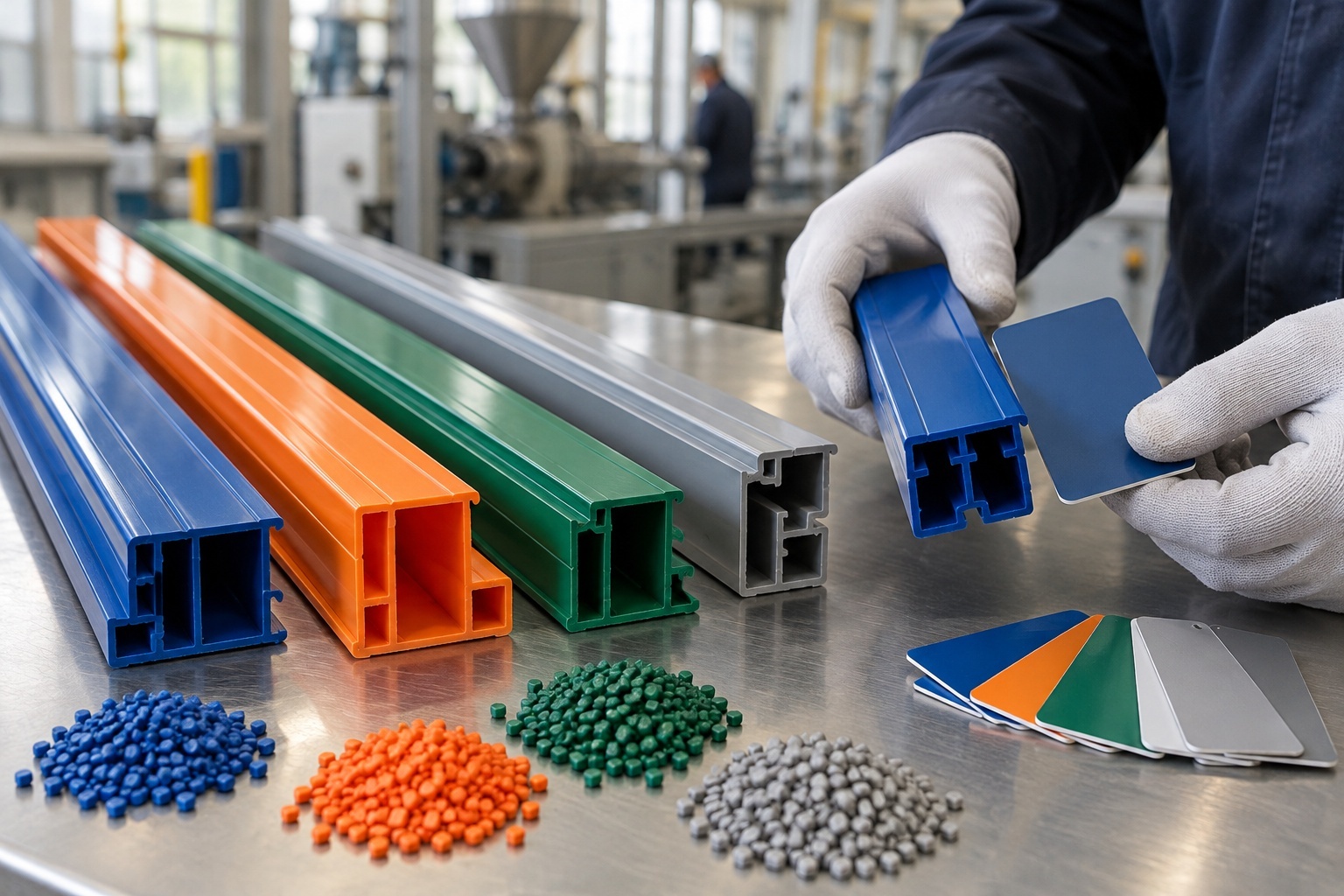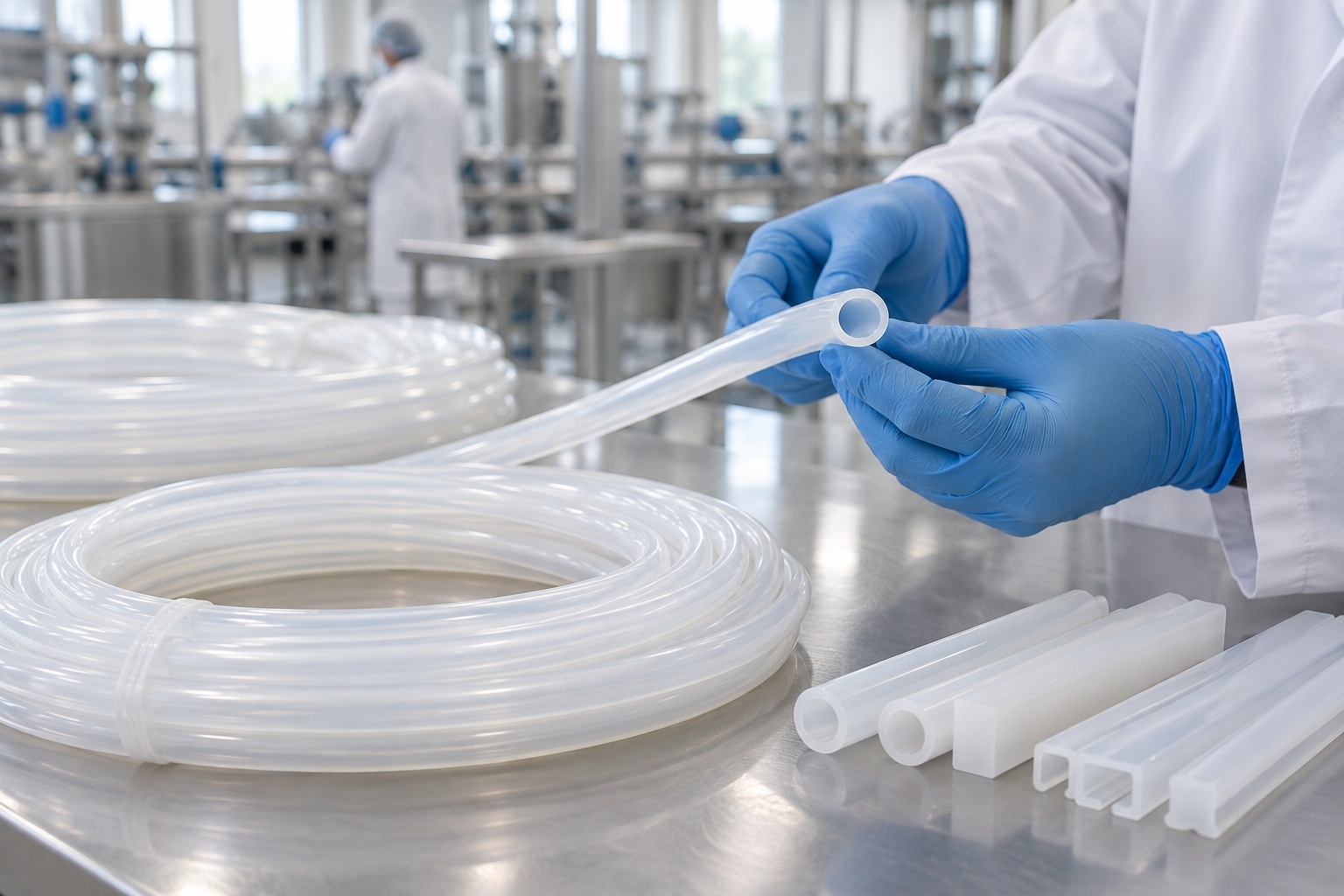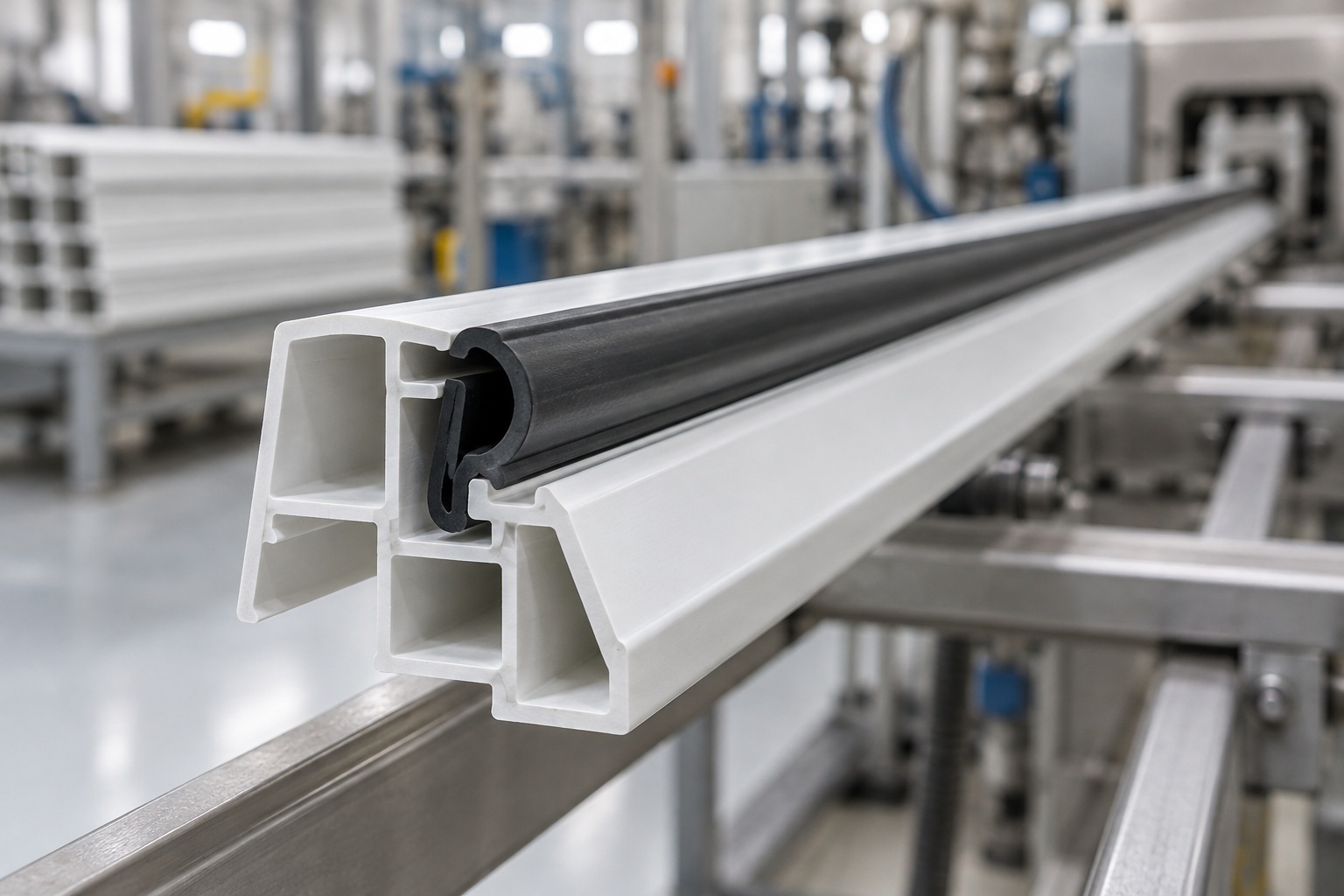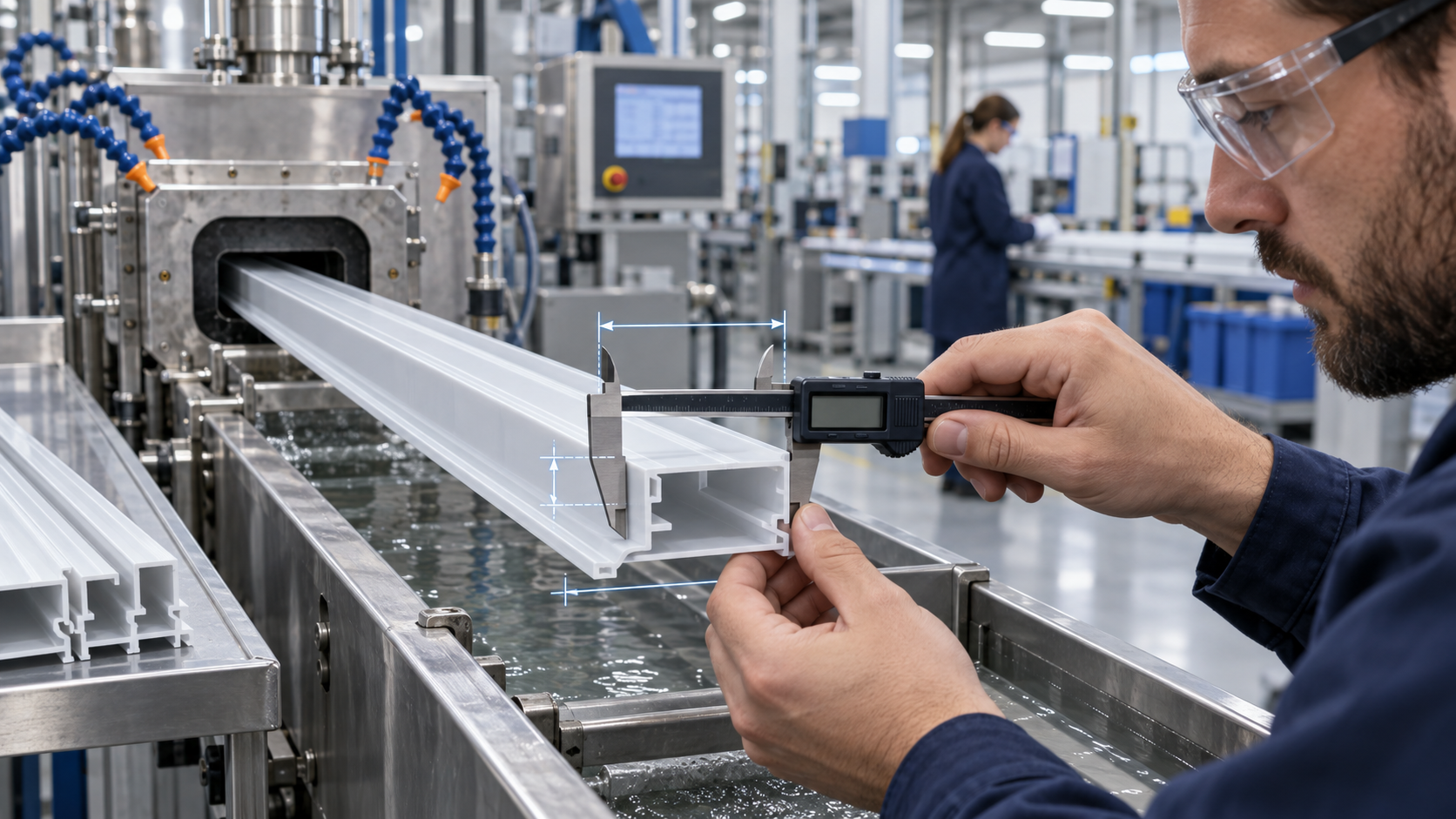
Picking a plastic for an extrusion sounds simple until you actually have to lock it in. Because on paper, PVC, ABS, and PP can all “work” for a profile or tube. But then you get into the real stuff. Temperature swings. Impact in the field. Will it sit in the sun. Does it need to glue. Does it need to look good. Does it need to stay straight.
This is a quick selector. Not a textbook. Just the stuff that usually decides it.
The 20 second answer (when you’re in a hurry)
- Choose PVC when you need cost control, stiffness, dimensional consistency, good surface finish, and you might need flame performance or easy fabrication (cementing, welding, painting).
- Choose ABS when you need higher impact, better toughness in cooler temps, and a nice-looking part that still machines well.
- Choose PP when you need chemical resistance, fatigue resistance (living hinge behavior), low density, and you can live with more thermal movement and usually a less “crisp” profile.
Now the longer, more useful version.
PVC for extrusions (rigid and flexible)
PVC is the workhorse for extruded profiles for a reason. It’s stable, predictable, and it’s forgiving from a manufacturing standpoint. Rigid PVC in particular holds shape well and gives you clean corners and consistent dimensions.
Why people pick PVC
- Good stiffness for structural-ish profiles (not metal, but you know what I mean).
- Great dimensional control in extrusion. Less wandering.
- Nice surface finish. Can be glossy, matte, textured.
- Flame performance options are often better than the other two, depending on compound and requirements.
- Joins and fabricates easily. Cementing and solvent welding are common. Also takes fasteners reasonably well with proper design.
- Cost effective in a lot of profile applications.
Tradeoffs
- Cold impact can be a concern unless you spec the right compound.
- Heat distortion is not amazing. Put it near heat and you will learn quickly.
- Outdoor UV needs attention. You can absolutely run exterior PVC, but you need the right package (stabilizers, TiO2, etc).
Typical extrusion uses Window and door profiles, trim, channels, enclosures, certain utility protection components, general OEM profiles where straightness and repeatability matter.
ABS for extrusions
ABS is usually the answer when PVC is “almost” there, but you need more toughness and a more premium feel. It’s also popular when the part needs to be machined, drilled, or finished and you want it to behave nicely.
Why people pick ABS
- Impact resistance is the headline. Especially compared to rigid PVC.
- Toughness in lower temperatures is often better than you’d expect.
- Great appearance potential. Smooth surfaces, good colorability, paintable.
- Machinability is solid. Cuts cleanly.
Tradeoffs
- Chemical resistance is not its superpower. Oils and solvents can be an issue depending on exposure.
- UV outdoors is a common pitfall. Standard ABS will weather and fade without protection or an ASA cap or coating strategy.
- Flame ratings vary. You can compound for it, but don’t assume.
Typical extrusion uses Appliance and office furniture components, interior trims, housings, protective profiles where impact matters, parts that need a nicer cosmetic finish.
PP for extrusions (polypropylene)
PP is a different vibe. It’s lightweight, chemically tough, and it has excellent fatigue resistance. But it moves around more with heat and it can be less rigid, so you have to design for that from the start.
Why people pick PP
- Excellent chemical resistance. Acids, bases, many aqueous environments. Big win.
- Great fatigue resistance. If the part flexes repeatedly, PP is often the quiet winner.
- Low density. Light parts, lower material weight.
- Moisture resistance is excellent.
Tradeoffs
- Higher thermal expansion. Long profiles can grow and shrink more than you want.
- Lower stiffness than PVC and ABS (depending on grade and design).
- Bonding is harder. Adhesives can be tricky without surface treatment.
- Creep under load can matter if something is constantly stressed.
Typical extrusion uses Chemical handling components, certain tubing, protective covers, parts in wet or corrosive environments, applications that benefit from flexibility and durability rather than rigidity.
A simple decision flow (what I’d ask first)
- Is it going outdoors or seeing UV? PVC with a proper UV package is the common choice. ABS needs added protection. PP can work with stabilization but watch for thermal movement.
- Does it need to be stiff and stay straight? Reach for PVC first, ABS second. Use PP only if you design around flex and expansion.
- Is chemical exposure a big deal — cleaners, acids, salts, wastewater? PP usually jumps to the top of the list.
- Will it get hit, dropped, or abused? ABS is often the safer call for impact resistance.
- Do you need easy joining, gluing, or field fabrication? PVC is typically the easiest path.
If you want a fast, correct recommendation
If you’re trying to choose between PVC, ABS, and PP for an extruded profile or tube, the fastest way is to share: application, environment (UV, chemicals, temperature), impact expectations, length/tolerance needs, and any joining or finishing requirements.
That’s the kind of material guidance and made to spec extrusion support Accord Plastics Corp does every day. If you want, you can start with a quick quote or reach out through https://accordplastics.com and just send the sketch and what the part has to survive. The right resin choice gets a lot easier when the end use is clear.
FAQs (Frequently Asked Questions)
What are the key factors to consider when choosing between PVC, ABS, and PP for plastic extrusions?
When selecting a plastic for extrusion, consider temperature swings, impact resistance, UV exposure, bonding needs, appearance requirements, and dimensional stability. PVC offers cost control and stiffness with good surface finish and flame performance; ABS provides higher impact resistance and a premium look; PP excels in chemical and fatigue resistance but has more thermal movement.
Why is PVC often chosen for extruded profiles and tubes?
PVC is a workhorse material due to its stability, dimensional consistency, good stiffness, excellent surface finish options (glossy, matte, textured), flame performance capabilities, easy fabrication methods like cementing and welding, and cost-effectiveness. It’s ideal for window/door profiles, trims, enclosures, and applications where straightness matters.
In what situations is ABS preferred over PVC for extrusion?
ABS is preferred when higher impact resistance and toughness at lower temperatures are required along with a nicer cosmetic finish. It machines well for drilling or finishing and is suitable for appliance parts, office furniture components, interior trims, housings, and protective profiles where durability and appearance are important.
What advantages does polypropylene (PP) offer for extrusion applications?
PP provides excellent chemical resistance against acids and bases, outstanding fatigue resistance suitable for living hinges or flexing parts, low density resulting in lightweight components, and superior moisture resistance. It’s commonly used in chemical handling parts, tubing, protective covers, or wet/corrosive environments where flexibility is valued over rigidity.
How do PVC, ABS, and PP compare in terms of UV resistance and outdoor use?
PVC can perform well outdoors with proper UV stabilizers like TiO2; ABS generally fares poorly unless protected by coatings or ASA caps; PP has fair UV resistance with stabilization but exhibits more thermal expansion which must be accounted for in design.
What are common tradeoffs to consider when using PP for extrusions?
PP has higher thermal expansion leading to dimensional changes in long profiles; it has lower stiffness compared to PVC or ABS; bonding can be challenging without surface treatment due to poor adhesive compatibility; also creep under constant load may affect performance if the part is continuously stressed.