Walk through any modern building and you’re surrounded by extruded plastic — usually without noticing it. Window frames, door seals, siding channels, baseboard and trim, drainage pipe, cable protection, glazing beads, expansion joints. Plastic extrusion in the construction industry quietly replaced wood and metal across dozens of applications because it delivers dimensional consistency, corrosion resistance and installed cost savings that traditional materials can’t match.
For specifiers, product managers and manufacturers serving construction, the question isn’t whether to use extruded plastic profiles — it’s whether to accept a stock profile or commission a custom one. This guide covers where extrusion is used, which materials suit which applications, and why custom tooling often pays for itself faster than expected.
Why Plastic Extrusion Is Essential in Construction
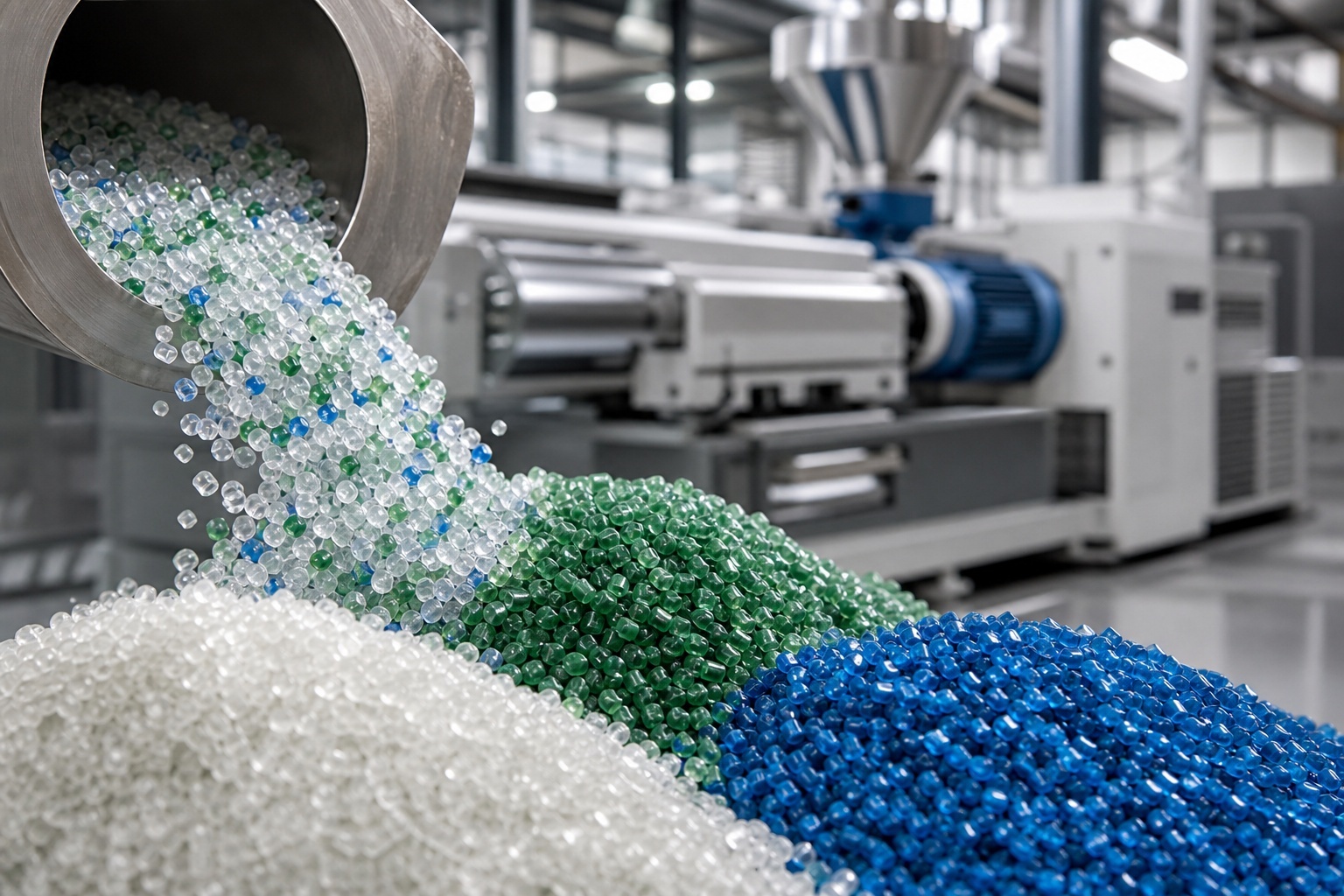
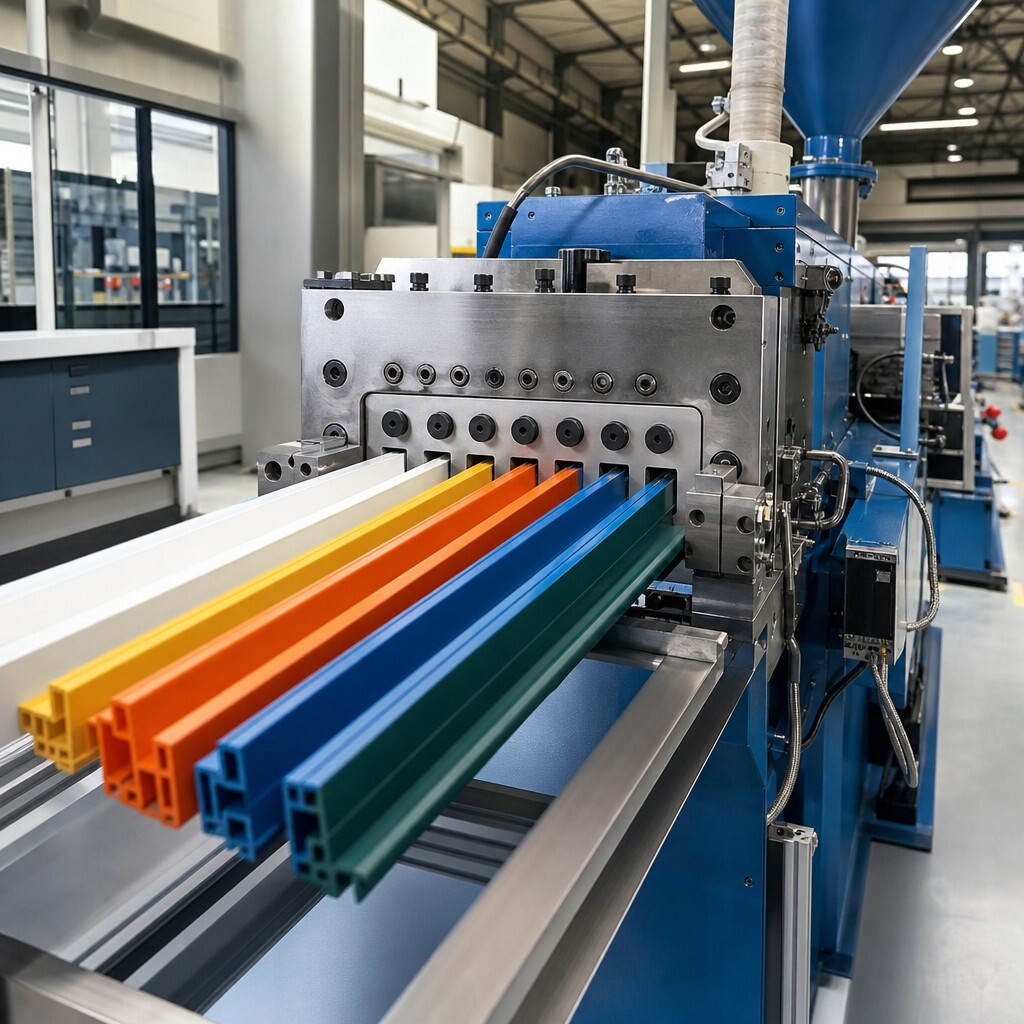
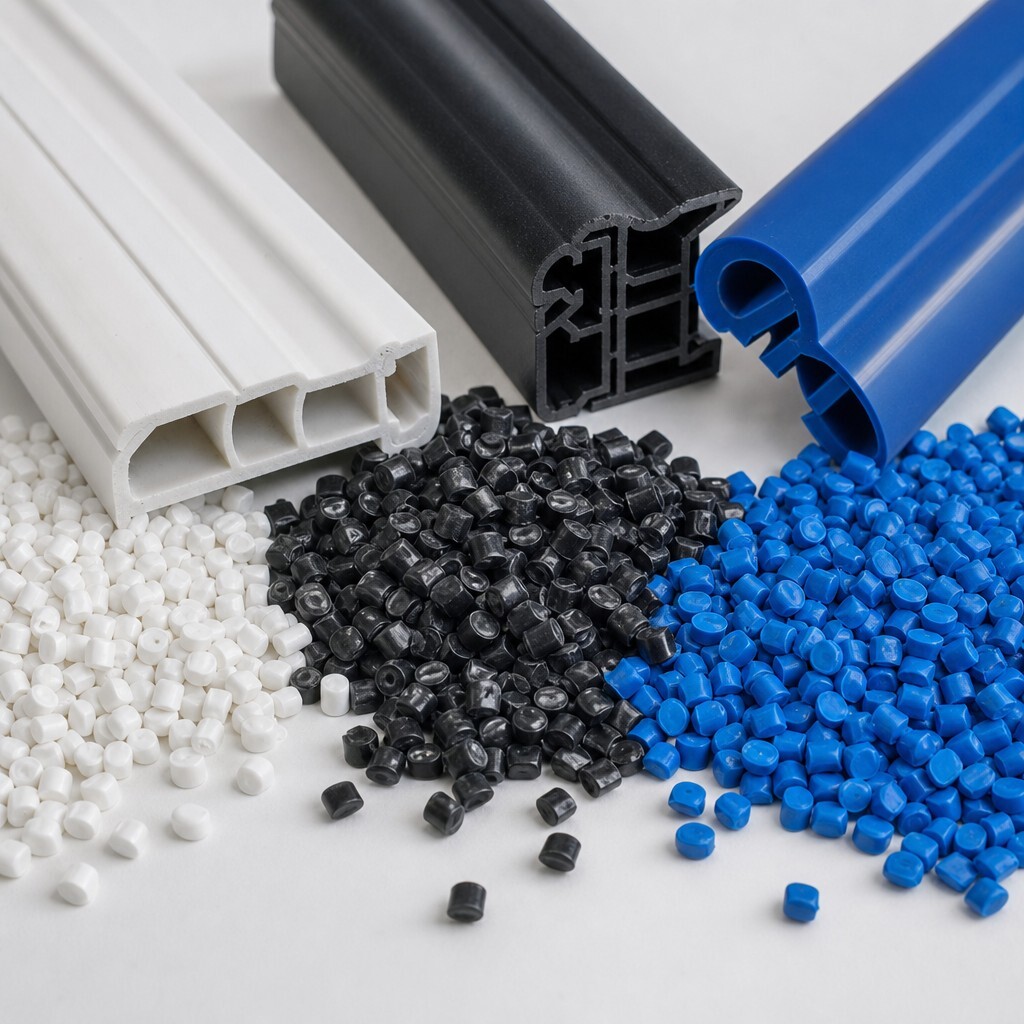
Extrusion works by forcing molten thermoplastic through a shaped die to create a continuous profile, typically at barrel temperatures between 150°C and 300°C depending on the resin. The process is inherently suited to construction because buildings need long, uniform, repeatable lengths of precisely shaped material.
The construction sector is one of the largest demand drivers for extruded plastics globally. The plastic extrusions market sits at roughly $168 billion in 2026 and is forecast to reach approximately $257 billion by 2035 — a 4.8% CAGR — with construction profiles named as a principal growth driver alongside packaging and automotive.
What extrusion delivers that alternatives don’t
- Dimensional consistency across long runs. Once a die is dialled in, profile 1 and profile 10,000 are effectively identical — critical when profiles must interlock with windows, panels or each other on site.
- Corrosion and moisture immunity. No rust, no rot, no painting cycle. In exterior and below-grade applications this is decisive.
- Thermal performance. Multi-chambered PVC profiles trap air, which is why vinyl window frames outperform aluminum on U-value without a thermal break.
- Complex geometry at low incremental cost. Snap-fit legs, integrated gaskets, screw bosses, drainage channels and mounting flanges can all be extruded into a single part — replacing multi-part assemblies.
- Weight reduction. Lighter profiles cut freight cost and speed installation, which reduces labour hours on site.
- Co-extrusion for hybrid performance. A single pass can bond a UV-stable, weather-resistant cap layer to a lower-cost or recycled-content substrate — premium surface, economical core.
Common Construction Applications
Window and door profiles
The largest single construction application. Vinyl window frames, sashes, glazing beads, sill extenders, brickmould, and thermal break components are almost universally extruded. Requirements are demanding: tight tolerances so components seal correctly, weatherability across Canadian temperature swings, and colour stability over decades of UV exposure. Our detailed look at plastic extrusion for windows and doors covers the ROI case for this segment.
Trim, moulding and architectural detail
Baseboard, casing, crown moulding, corner guards, reveal trim, and decorative profiles. Extruded plastic trim doesn’t absorb moisture, warp or require finishing — a significant advantage in bathrooms, kitchens, basements and commercial corridors. Cap-stocking and decorative lamination let a plastic profile match a wood or metal appearance while retaining plastic’s stability.
Siding, cladding and accessories
Vinyl siding panels, J-channel, starter strip, soffit, fascia, corner posts and drip edge. Co-extrusion is standard here: a weather- and UV-resistant outer layer over a substrate that may include recycled content.
Piping, conduit and drainage
Drain, waste and vent pipe, electrical conduit, cable duct, underground drainage, and radon mitigation piping. Requirements shift toward crush resistance, joint integrity and long-term chemical resistance.
Wire, cable and utility protection
Ground wire moulding, spiral wrap, pipe guards, and underground protective guards — profiles that shield services from mechanical damage, rodents and impact. Accord’s own utility systems product line is built entirely on this application category.
Sealing, gasketing and expansion
Weatherstripping, glazing gaskets, threshold seals, expansion joint covers, and edge protection. Flexible PVC and TPE profiles handle the compression-set requirements; rigid-flexible co-extrusions let a single part be stiff where it mounts and soft where it seals.
Interior and commercial fit-out
Partition and glazing channels, ceiling grid trim, wall protection rails, shelf edging, LED channel and diffuser profiles, and display components — much of it in high-rise construction, where consistency across hundreds of identical units is paramount.
Materials Used in Construction Extrusion
| Material | Strengths | Best-fit construction uses |
|---|---|---|
| Rigid PVC | Excellent weatherability, inherent flame retardance, low cost, good stiffness | Window frames, siding, trim, drainage, conduit |
| Flexible PVC | Compression recovery, sealing, easy to co-extrude with rigid PVC | Weatherstrip, gaskets, edge protection |
| ABS | High impact strength, excellent surface finish, easy to paint and bond | Interior trim, fixture components, painted architectural profiles |
| Polycarbonate | Outstanding impact resistance, optical clarity, high heat tolerance | Glazing panels, skylights, light diffusers, safety guards |
| HDPE / Polyethylene | Chemical resistance, toughness at low temperature, moisture barrier | Below-grade drainage, protective guards, geotechnical profiles |
| Polypropylene | Good chemical resistance, living-hinge capability, light weight | Interior components, hinged profiles, cable management |
| TPE / TPV | Rubber-like elasticity, recyclable, bonds to rigid substrates | Seals and gaskets in demanding weather exposure |
Material selection considerations that matter in construction
- UV and colour stability. Exterior profiles need appropriate stabilizer packages and pigments. Dark colours absorb more heat and demand higher heat-deflection performance.
- Thermal expansion. Plastics move more than metals with temperature. Long exterior runs need expansion accommodated in the joint design, not fought.
- Flame and smoke requirements. Interior and commercial applications frequently carry code-driven flame spread and smoke development limits — verify against the relevant standard before finalizing material.
- Regulatory shifts. Phthalate restrictions under REACH and evolving North American standards continue to push formulations toward alternative and bio-based plasticizers. Confirm your supplier’s compliance roadmap, not just their current data sheet.
- Recycled content. Co-extrusion and in-house regrind allow meaningful recycled content in the substrate without compromising the visible surface — increasingly relevant for green building credits. See our discussion of sustainability in plastic extrusion.
If you’re weighing the three most common resins directly, our PVC vs ABS vs HDPE comparison lays out the trade-offs side by side.
Benefits of Custom Extrusion Over Stock Profiles
Stock profiles are cheaper per foot and available immediately. They also force you to design around what already exists. Custom tooling flips that relationship, and the payback is usually clearer than teams assume.
- Part consolidation. A custom profile can integrate what previously took two or three parts plus fasteners. Fewer SKUs, fewer assembly steps, fewer failure points, less installed labour.
- Exact fit. No shimming, no field modification, no callbacks from installers working around a profile that “almost” fits.
- Material optimization. Wall thickness placed only where load demands it. On high-volume runs, trimming grams per foot compounds into real annual material savings.
- Product differentiation. A profile competitors can’t buy off a shelf is a defensible product feature, not a commodity.
- Predictable supply. A dedicated die with a domestic extruder insulates you from overseas lead-time volatility — which has been the dominant procurement pain point of recent years. Our post on lead time killers in plastic extrusion covers this in depth.
The tooling question
Custom die tooling is a one-time investment, typically modest relative to injection mould tooling for a comparable part. The break-even calculation should weigh tooling cost against annual savings in material, assembly labour, installation time and warranty claims — not against the per-foot price of the stock profile alone. For most construction products running steady annual volume, break-even arrives faster than a single product cycle.
How to Partner With a Custom Extrusion Manufacturer
- Bring the function, not just the drawing. Explain what the profile must do — seal, span, snap, carry load, resist UV. A good extruder will suggest geometry you hadn’t considered.
- Engage engineering early. Design-for-extrusion review before tooling avoids uniform-wall violations, sharp internal corners and tolerance stacks that cause problems later. Accord’s engineering and design team handles this at the concept stage.
- Set realistic tolerances. Over-tight tolerances raise scrap and cost without improving fit. Our guide to realistic tolerances in extruded profiles explains what extrusion can genuinely hold.
- Prototype before committing. 3D-printed models and short pilot runs validate assembly and installation before hard tooling is cut.
- Confirm secondary capability. Fabrication, in-house die cutting, hole punching, tape application and decorative lamination delivered under one roof eliminates a supplier handoff and shortens lead time.
- Verify volume fit and quality systems. Match your annual volume to a supplier that wants it, and confirm inspection protocol and documentation up front.
Frequently Asked Questions
What is plastic extrusion used for in the construction industry?
Window and door profiles, siding and cladding accessories, interior trim and moulding, drainage and DWV piping, electrical conduit and cable protection, weatherstripping and gaskets, expansion joint covers, and glazing or partition channels. Essentially any application requiring long, precisely shaped, weather-durable lengths of material.
Is extruded plastic durable enough for exterior building applications?
Yes, when properly specified. Rigid PVC window and siding profiles routinely deliver 25–40+ year service lives with appropriate UV stabilizers and pigment selection. Durability failures almost always trace back to inadequate stabilizer packages or thermal expansion that wasn’t accommodated in the joint design — both solvable at the specification stage.
How long does custom extrusion tooling take?
Typical die design, fabrication and first-article approval runs 4–8 weeks depending on profile complexity, plus time for pilot run validation. Complex multi-cavity or co-extrusion tooling sits at the longer end. Production lead times after tooling approval are considerably shorter.
Can extruded profiles include recycled material?
Yes. In-house regrind and post-consumer resin can be incorporated into substrate layers, with co-extrusion providing a virgin cap layer where appearance or weatherability is critical. This is a common route to recycled-content targets without sacrificing surface quality.
How do I choose between extrusion and injection moulding?
Extrusion suits continuous parts with a constant cross-section cut to length — profiles, tubes, channels, trim. Injection moulding suits discrete three-dimensional parts with varying geometry — end caps, connectors, brackets. Many construction products use both: extruded lengths with moulded terminations.
Build Better With Custom Extruded Profiles
Plastic extrusion in the construction industry is no longer a substitution story — it’s the default for a growing list of applications, and the gap between a stock profile and one engineered for your product is where competitive advantage lives.
Accord Plastics has been designing and manufacturing custom extruded profiles for construction, high-rise, windows and doors, and utility protection markets across Canada for decades — with engineering, tooling, extrusion and secondary fabrication in-house. Explore our high-rise construction capabilities or request a quote to discuss your profile.