The Push for Sustainability in Plastics Manufacturing
The plastics industry is changing — and fast. Regulatory pressure, customer expectations, and rising raw material costs are pushing manufacturers toward more sustainable practices. For companies that rely on custom plastic extrusion, the question is no longer if sustainability matters, but how to implement it without sacrificing quality or increasing costs.
The good news? Sustainable plastic extrusion isn’t just an environmental initiative. It’s a competitive advantage. Manufacturers who integrate recycled materials and energy-efficient processes are reducing costs, winning new contracts, and meeting supply chain requirements that didn’t exist five years ago.
Here’s what procurement managers, product designers, and manufacturing engineers need to know about sustainability in the extrusion process.
Recycled Materials in Extrusion: What Works and What Doesn’t
Post-Consumer vs. Post-Industrial Recycled Resins
Not all recycled plastic is created equal. Understanding the difference matters for extrusion quality:
- Post-industrial recycled (PIR) resins: Scrap material from manufacturing processes — offcuts, purge material, and rejected parts. PIR resins are cleaner, more consistent, and easier to process because they’ve never been contaminated by consumer use. They’re the preferred starting point for extrusion.
- Post-consumer recycled (PCR) resins: Materials collected from consumers — bottles, packaging, containers. PCR resins are more variable in composition and may contain contaminants that affect melt flow, colour consistency, and mechanical properties.
Recycled Resins That Work Well in Extrusion
- rHDPE (recycled high-density polyethylene): One of the most widely recycled plastics. Works well in extrusion for profiles, tubing, and protective guards. Maintains good structural integrity at high recycled content levels.
- rPET (recycled polyethylene terephthalate): Commonly sourced from beverage bottles. Suitable for certain sheet and film extrusion applications, though it requires careful moisture management during processing.
- rPP (recycled polypropylene): Increasingly available from automotive and packaging waste streams. Good for non-structural profiles and covers where flexibility is needed.
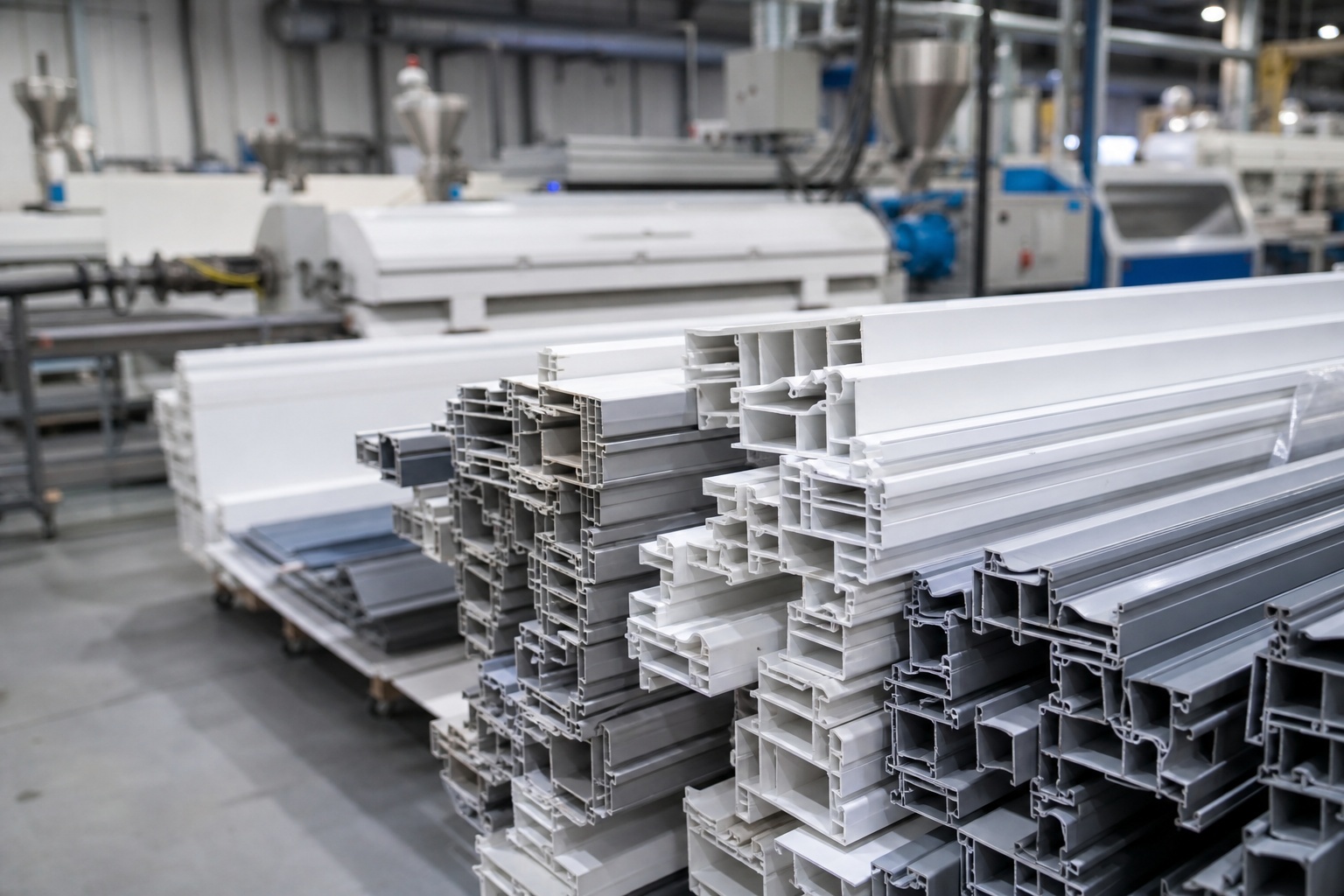
- rPVC (recycled polyvinyl chloride): PVC is highly recyclable and maintains its properties through multiple processing cycles. Window frames, pipes, and cable conduits made from rPVC are already common in Europe and gaining traction in North America.
Blending Ratios: Finding the Sweet Spot
Most extruders don’t run 100% recycled material. Instead, they blend recycled resins with virgin material to maintain consistent quality. Common blending approaches include:
- 20–30% recycled content: A safe starting point for most applications. Minimal impact on mechanical properties or colour consistency.
- 50% recycled content: Achievable with high-quality PIR resins and proper processing controls. May require adjustments to temperature profiles and die design.
- 70–100% recycled content: Possible for non-critical applications like spacers, guards, and internal structural components. Requires rigorous incoming material testing.
Reducing Waste in the Extrusion Process
Sustainability isn’t just about what goes into the extruder — it’s about what comes out. Waste reduction strategies include:
Closed-Loop Scrap Recovery
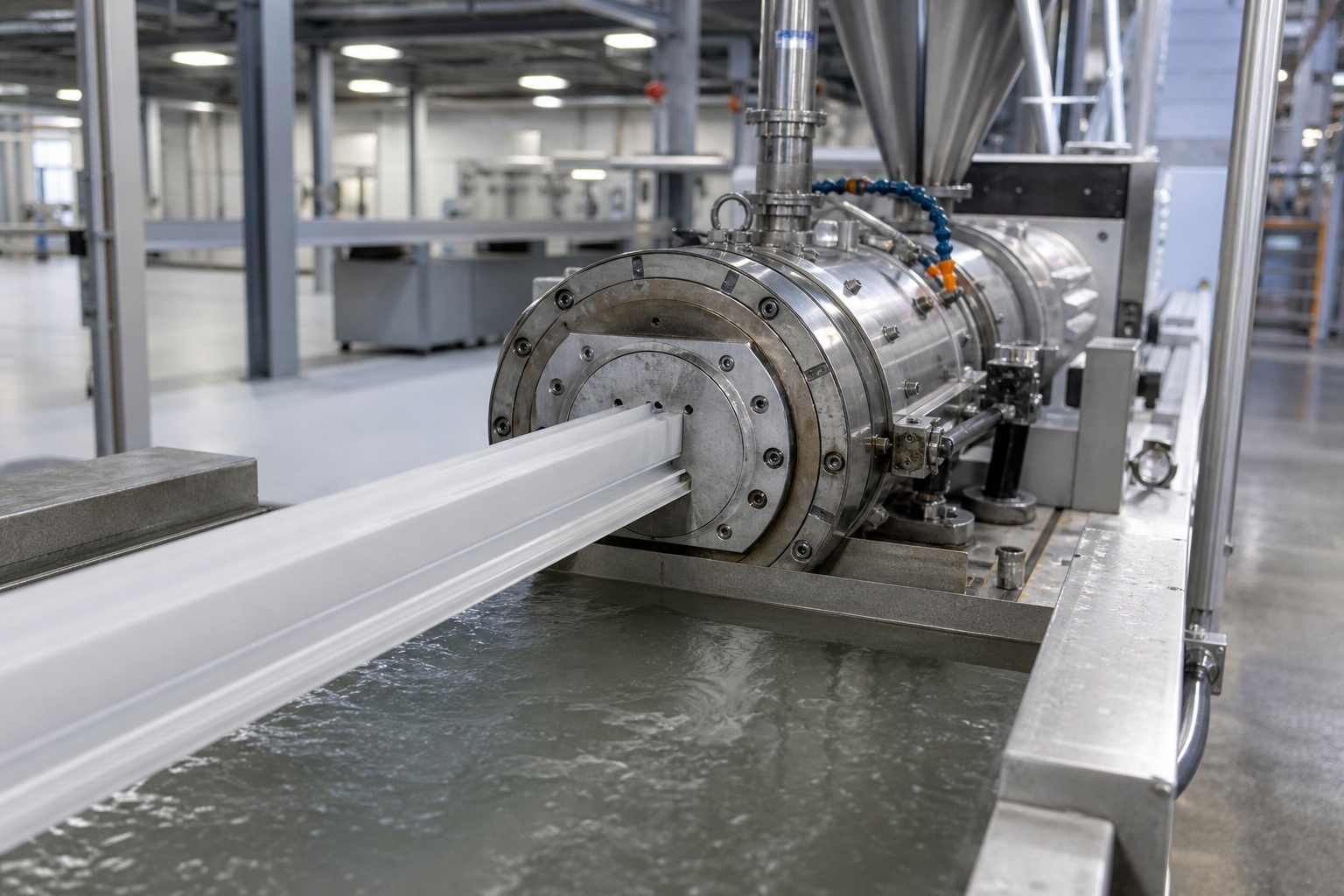
Modern extrusion facilities capture startup scrap, trim waste, and off-spec product and feed it directly back into the process. A well-designed closed-loop system can recover 95% or more of process waste, dramatically reducing material going to landfill and lowering raw material costs.
Precision Die Design
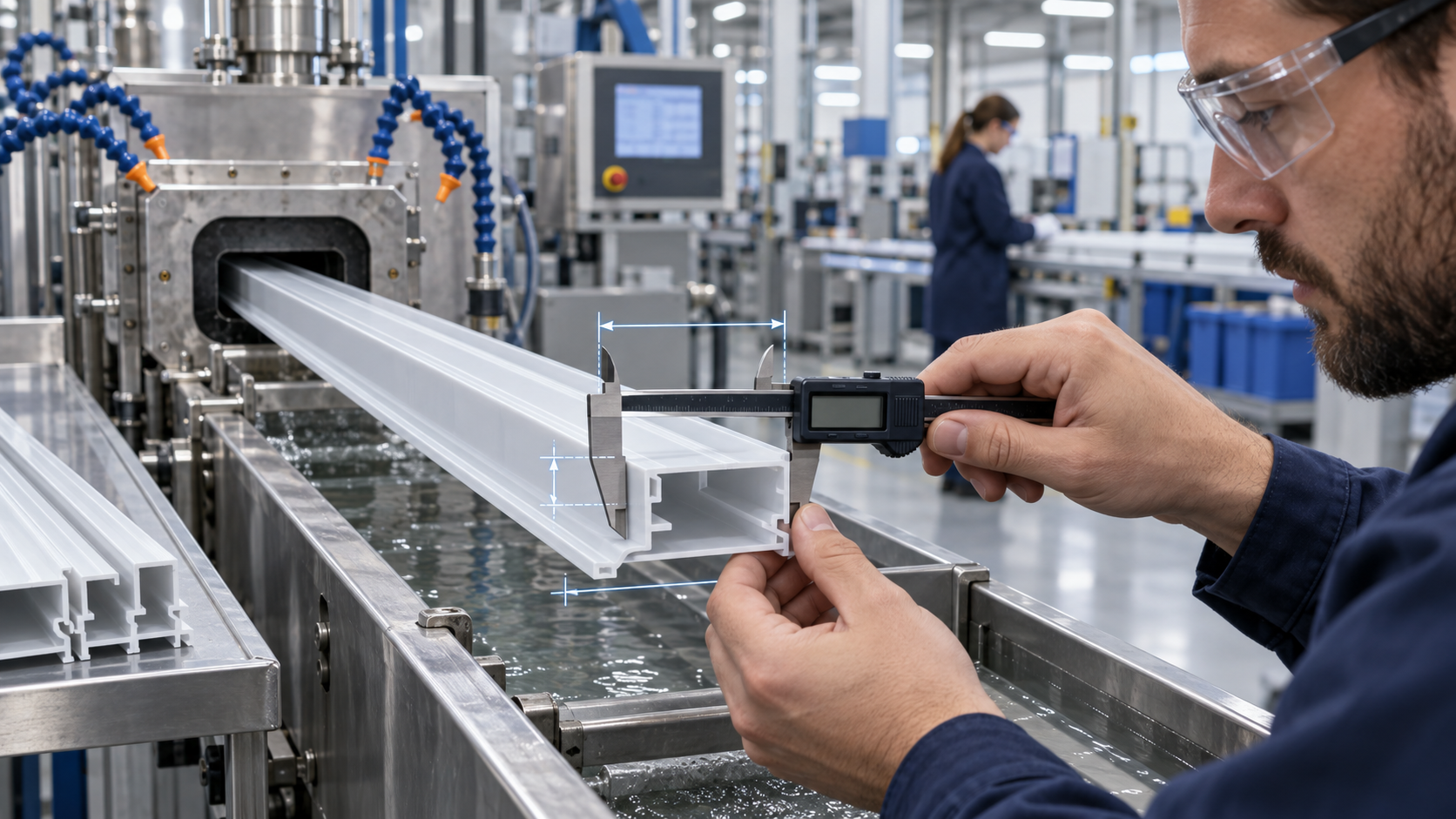
Better tooling means less waste. Advanced die design using flow simulation software reduces material overuse, minimizes flash, and produces profiles closer to final spec — meaning less secondary machining and trim waste. At Accord Plastics, our extrusion process is engineered for minimal material waste from the start.
Optimized Changeover Procedures
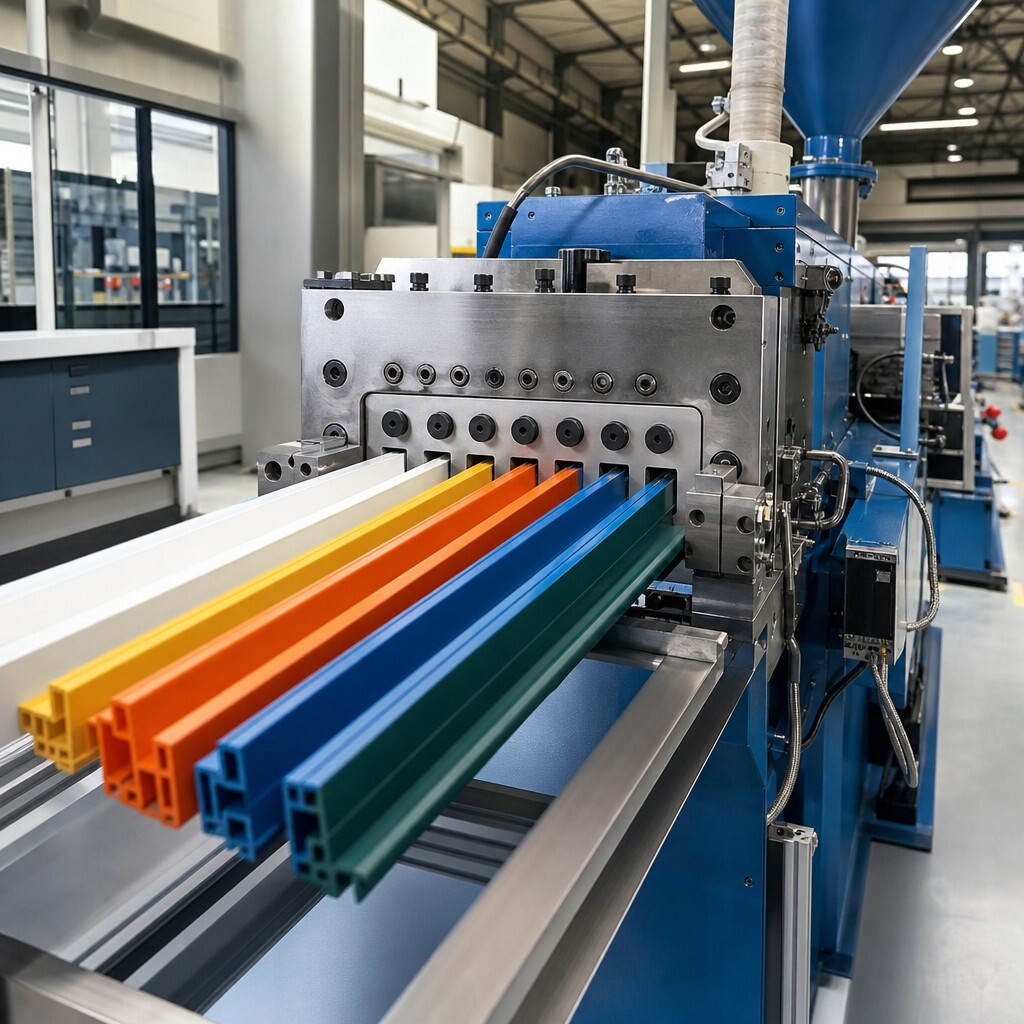
Material transitions between production runs generate purge waste. Standardized changeover procedures, colour sequencing strategies (light to dark), and purge compound optimization can cut changeover waste by 40–60%.
Energy Efficiency Improvements
Extrusion is an energy-intensive process. Here’s where manufacturers are making gains:
- High-efficiency drive motors: Replacing older AC drives with servo-driven extruders can reduce energy consumption by 30–50% while improving process control.
- Barrel insulation: Insulating blankets on extruder barrels reduce heat loss and can lower energy costs by 10–20% per machine.
- Water cooling optimization: Closed-loop cooling systems with variable-speed pumps use less water and energy than once-through cooling setups.
- LED lighting and building efficiency: Manufacturing floor upgrades — LED lighting, improved HVAC, and building envelope improvements — add up to significant annual savings.
The Business Case for Sustainable Extrusion
Beyond environmental responsibility, sustainability drives bottom-line results:
- Cost reduction: Recycled resins are typically 15–30% less expensive than virgin material, depending on grade and availability.
- Market access: Major OEMs and government procurement programs increasingly require minimum recycled content percentages from suppliers.
- Brand differentiation: For consumer-facing products, sustainability claims supported by real data are a genuine competitive advantage.
- Regulatory readiness: Getting ahead of recycled-content mandates and EPR regulations avoids last-minute scrambles and cost spikes.
FAQ
Does using recycled plastic compromise product quality?
Not when done correctly. With proper material testing, blending ratios, and process controls, recycled-content profiles can meet the same dimensional tolerances and mechanical specifications as virgin material products. The key is starting with high-quality recycled feedstock and adjusting processing parameters accordingly.
What percentage of recycled content is realistic for custom extrusions?
For most applications, 20–50% recycled content is achievable without significant process changes. Non-structural components can go higher. The right percentage depends on the specific material chosen, the application requirements, and the quality of available recycled feedstock.
Is sustainable extrusion more expensive?
In most cases, no. Recycled resins are often cheaper than virgin alternatives, and energy efficiency improvements reduce operating costs. Initial investment in testing and process validation is offset by ongoing material savings.
How do I verify a supplier’s sustainability claims?
Ask for third-party certifications (ISO 14001, UL recycled content), material test reports, and documented recycled content percentages. Reputable manufacturers will provide this data transparently.
What to Ask Your Extrusion Partner About Sustainability
If you’re evaluating suppliers or planning a new custom extrusion project with sustainability in mind, here are the questions that cut through the marketing:
- What recycled content percentages do you currently run? Look for specific numbers with material test data to back them up.
- Do you operate a closed-loop scrap recovery system? This is the single biggest indicator of a manufacturer’s commitment to waste reduction.
- Can you match the mechanical properties of our current virgin-material specification? A capable supplier will run test extrusions and provide data before committing.
- What certifications do you hold? ISO 14001 and UL recycled content certification are the minimum standards for verified sustainability claims.
- What’s your roadmap? Sustainability is a journey. Ask about planned improvements in energy efficiency, material sourcing, and waste reduction over the next 2–3 years.
Moving Toward Sustainable Manufacturing
Sustainability in plastic extrusion isn’t a future aspiration — it’s happening now. From recycled resins that perform as well as virgin materials to energy-efficient manufacturing processes that cut costs, the tools are available. The question is whether your supply chain is ready to take advantage of them.
Looking for a custom extrusion partner that takes sustainability seriously? Explore our capabilities or contact the Accord Plastics team to discuss your project requirements.