If you’re designing a part that will touch food, beverages, or a patient, the material you extrude matters as much as the profile geometry. Food grade plastic extrusion isn’t just about picking a resin with “FDA” on the data sheet. It’s about choosing a compliant material, designing a profile that can be cleaned, and working with a supplier who can document every step from pellet to finished part.
This guide walks engineers and procurement teams through what “food-grade” and “medical-grade” really mean, which materials are most common, the standards that apply in Canada and the U.S., and the design and documentation details that separate a compliant part from a costly recall.
What Makes a Plastic “Food-Grade” or “Medical-Grade”?
There’s no single “food-grade” stamp. A plastic is considered food-grade when its formulation—base resin plus every additive, colourant, and processing aid—is permitted for contact with food under specific conditions of use. Those conditions matter: a material cleared for room-temperature dry goods may not be cleared for hot, fatty, or acidic foods.
“Medical-grade” is similar but stricter. It usually means the resin supplier can show biocompatibility test data, lot traceability, and a stable formulation that won’t change without notice. Many resin makers sell dedicated medical grades for exactly this reason.
The part is only as compliant as its process
A compliant resin can still produce a non-compliant part if it’s contaminated with regrind from another job, run with a non-approved colour concentrate, or lubricated with the wrong processing aid. That’s why food-grade plastic extrusion depends on the extruder’s material handling and purging practices, not just the resin certificate.
Common Food-Grade and Medical-Grade Extrusion Materials
Most compliant extruded profiles and tubes come from a short list of materials. If you’re weighing general-purpose options first, our PVC vs ABS vs HDPE material comparison covers the basics.
HDPE (High-Density Polyethylene)
HDPE is a workhorse for food contact. It’s tough, moisture-resistant, chemically inert with most foods, and easy to clean. You’ll see it in conveyor wear strips, cutting-board edging, guide rails, and dispensing tubes.
PP (Polypropylene)
Polypropylene handles higher temperatures than HDPE, which makes it a strong choice for parts that go through hot-water washdowns or dishwashers. It also resists fatigue, so it’s popular for living hinges and clips.
PETG (Glycol-Modified PET)
PETG offers glass-like clarity with better impact resistance than acrylic. It’s used for display components, sneeze guards, and medical packaging where visibility matters. It isn’t suited to high-heat sterilization, so confirm your cleaning method early.
Flexible PVC and TPEs
Food-grade flexible PVC and thermoplastic elastomers (TPEs) are used for gaskets, seals, and flexible tubing. Plasticizer selection is critical here—ask for formulations that are phthalate-free and cleared for your food type.
Silicone compounds
Silicone tolerates extreme temperatures and repeated sterilization, which is why it dominates in medical tubing and high-heat food processing. Note that silicone is typically extruded and then cured, which is a different process from thermoplastic profile extrusion—so confirm your supplier’s capabilities before you design around it.
Compliance Standards: FDA, Health Canada, and ISO 10993
Canadian manufacturers often sell into both domestic and U.S. markets, so it helps to know how the main frameworks fit together.
FDA 21 CFR (United States)
The U.S. Food and Drug Administration lists permitted food-contact substances in Title 21 of the Code of Federal Regulations, Parts 174–179. Specific sections cover specific polymers—for example, 21 CFR 177.1520 covers olefin polymers such as polyethylene and polypropylene. When a supplier says a resin is “FDA compliant,” ask which section it complies with and under what conditions of use.
Health Canada
In Canada, food packaging and food-contact materials fall under the Food and Drugs Act and its regulations. Health Canada offers a voluntary pre-market review that results in a Letter of No Objection (LONO) for a specific material and use. Many Canadian food processors and retailers ask their suppliers for a LONO or equivalent documentation, even though it isn’t mandatory for every application.
ISO 10993 and USP Class VI (Medical)
For medical devices, ISO 10993 is the international standard series for biological evaluation—cytotoxicity, sensitization, irritation, and more, depending on how the device contacts the body and for how long. USP Class VI is an older U.S. pharmacopeia test that many resin suppliers still report. Your device’s risk classification determines which tests are needed; your regulatory team should drive that decision.
Other standards you may see
- NSF/ANSI 51 – materials used in commercial food equipment
- NSF/ANSI 61 – components in contact with drinking water
- EU 10/2011 – plastics intended to contact food in the European Union
Design Considerations for Hygienic Profiles
A compliant material won’t help if the part traps food residue or bacteria. Hygienic design is where engineering and extrusion expertise really pay off. Our engineering and design team typically reviews these points before tooling is cut.
Smooth bores and surfaces
Rough internal surfaces give bacteria somewhere to hide. Specify a surface finish target for tube bores and product-contact faces, and ask how the die and sizing setup will achieve it.
Avoid crevices, sharp internal corners, and dead legs
Generous radii on internal corners make cleaning faster and more effective. Avoid narrow channels or undercuts that a brush or cleaning solution can’t reach.
Sealed joints and assemblies
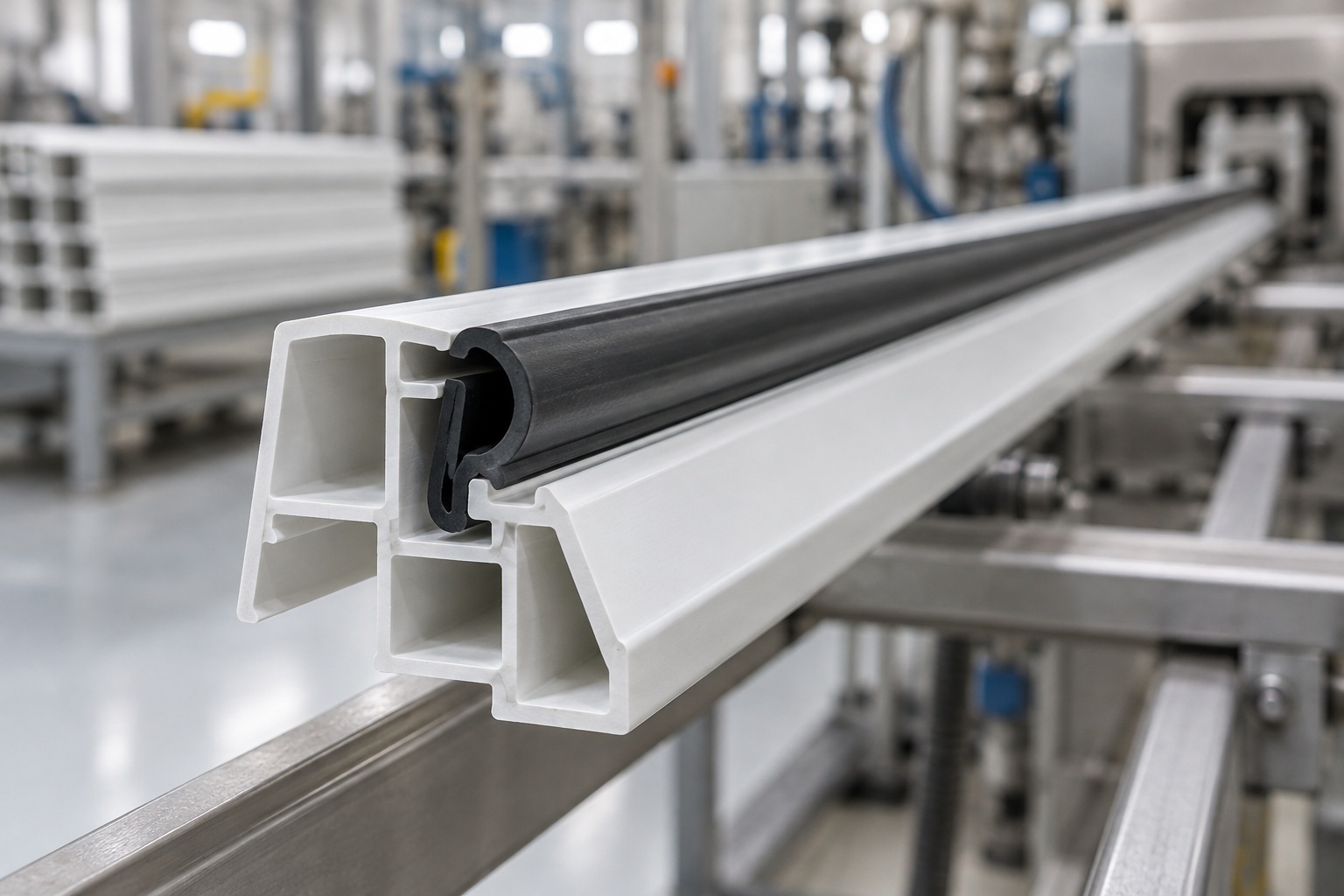
Where extruded parts meet other components, design for sealed, gap-free joints. Welded or co-extruded seals are often better than mechanical fits that can open up over time.
Plan for your cleaning and sterilization method
Hot-water washdown, caustic cleaners, steam, gamma, or ethylene oxide sterilization all stress materials differently. Tell your extruder how the part will be cleaned so the resin and wall thickness can be matched to it.
Colour and identification
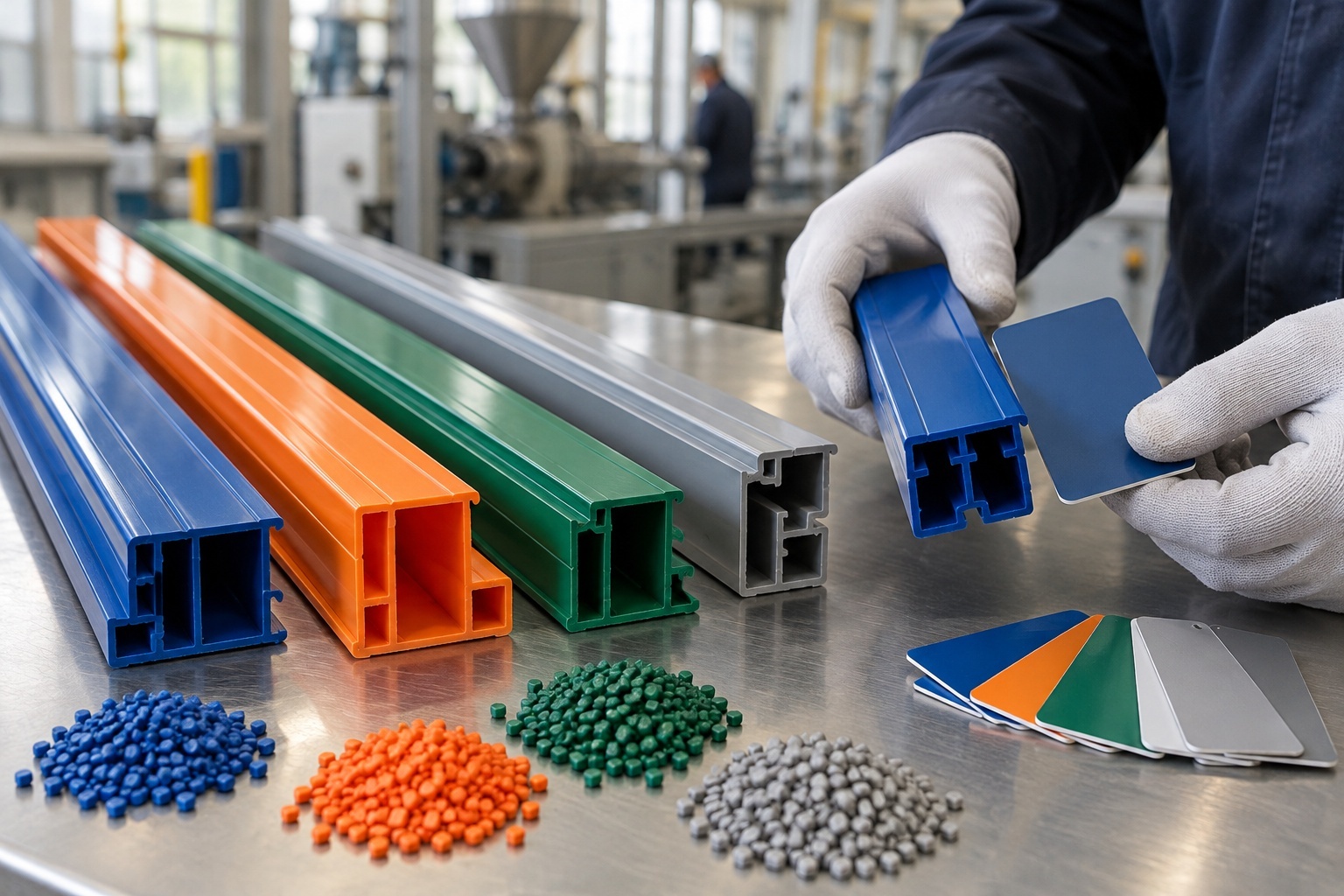
Colour-coded parts (for example, blue for easy visual detection in food) are common. The colourant must be compliant too, so confirm the concentrate’s food-contact status—not just the base resin’s.
Testing and Documentation Your Supplier Should Provide
For regulated applications, paperwork is part of the product. Before you approve a supplier for food grade plastic extrusion, ask for:
- Resin compliance statements naming the specific regulation (e.g., 21 CFR section, LONO number) and conditions of use.
- Colourant and additive compliance letters for every ingredient in the compound.
- Lot traceability from resin lot to finished-part lot.
- Certificates of Analysis (CoA) or Certificates of Conformance with each shipment.
- Change notification commitments, so you’re told before any resin or process change.
- Regrind policy in writing—many food and medical customers require 100% virgin material, or only same-job regrind.
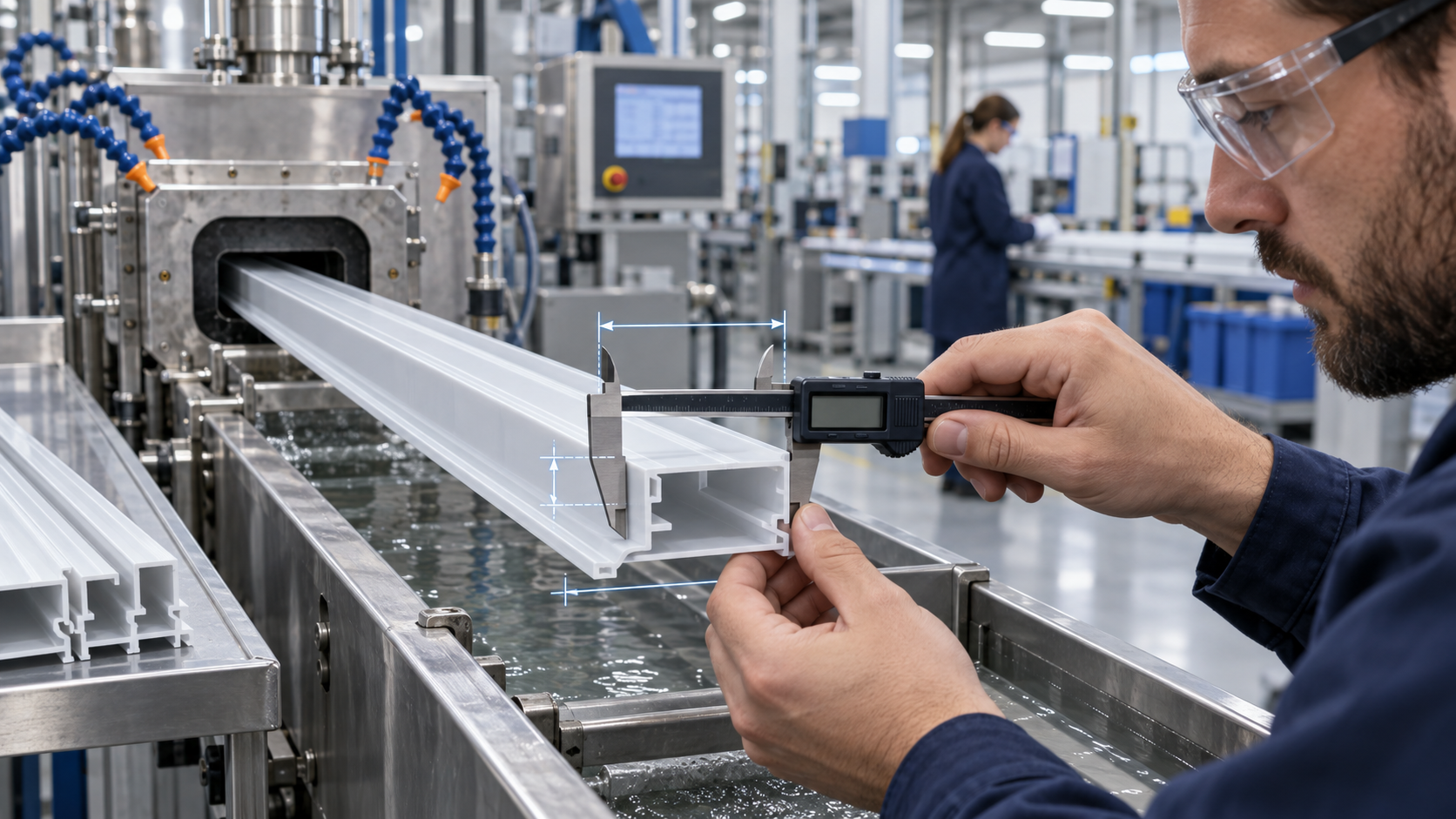
- Dimensional inspection reports for first articles and ongoing production. See our guide to extrusion tolerances and prototyping for what’s realistic.
Bringing these requirements into your RFQ up front avoids re-quotes later. If you’re preparing one now, it’s worth reviewing how the custom extrusion process works so your drawings and specs line up with how the part will actually be made.
FAQ
Is HDPE food-safe?
Yes—HDPE is one of the most widely used food-contact plastics. Food-grade HDPE resins are cleared under FDA 21 CFR 177.1520, but confirm that the specific grade, and any colourant used, is cleared for your food type and temperature.
What’s the difference between “FDA compliant” and “FDA approved”?
The FDA doesn’t “approve” most plastic resins in the way it approves drugs. “FDA compliant” means the material’s formulation meets the requirements of a listed regulation. Always ask which regulation and under which conditions of use.
Do I need a Health Canada Letter of No Objection?
Not always. A LONO is voluntary, but many Canadian food processors and retailers request it as proof of compliance. Check with your customer’s quality team.
Can recycled plastic be used for food-contact extrusion?
Only in limited cases, and generally only with post-consumer recycled material that has been specifically reviewed for food contact. Most food and medical extrusion uses virgin resin with controlled, same-job regrind—or none at all.
Is ISO 10993 required for every medical part?
The testing required depends on the device’s contact type and duration. A part that never touches the patient may need far less testing than an implant or fluid path. Your regulatory lead should define the requirement.
Talk to an Extrusion Partner Who Understands Compliance
Food grade plastic extrusion rewards careful planning: the right resin, a profile designed to be cleaned, and a supplier who documents every lot. Getting those three right up front protects your product, your customers, and your brand.
Accord Plastics designs and extrudes custom plastic profiles in Canada. If you’re developing a food-contact or medical part, contact our team to review your material options, profile design, and documentation needs before you go to tooling.