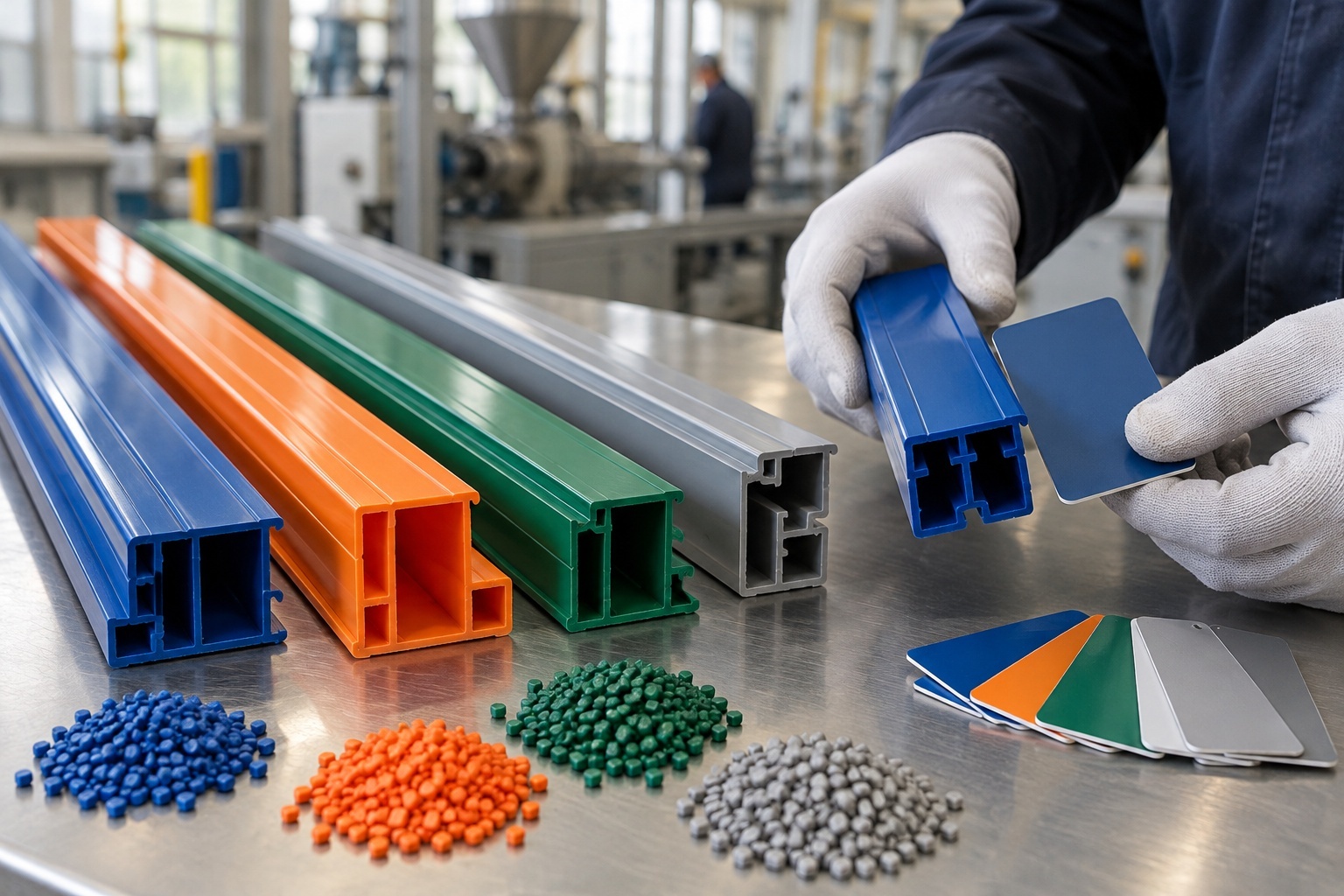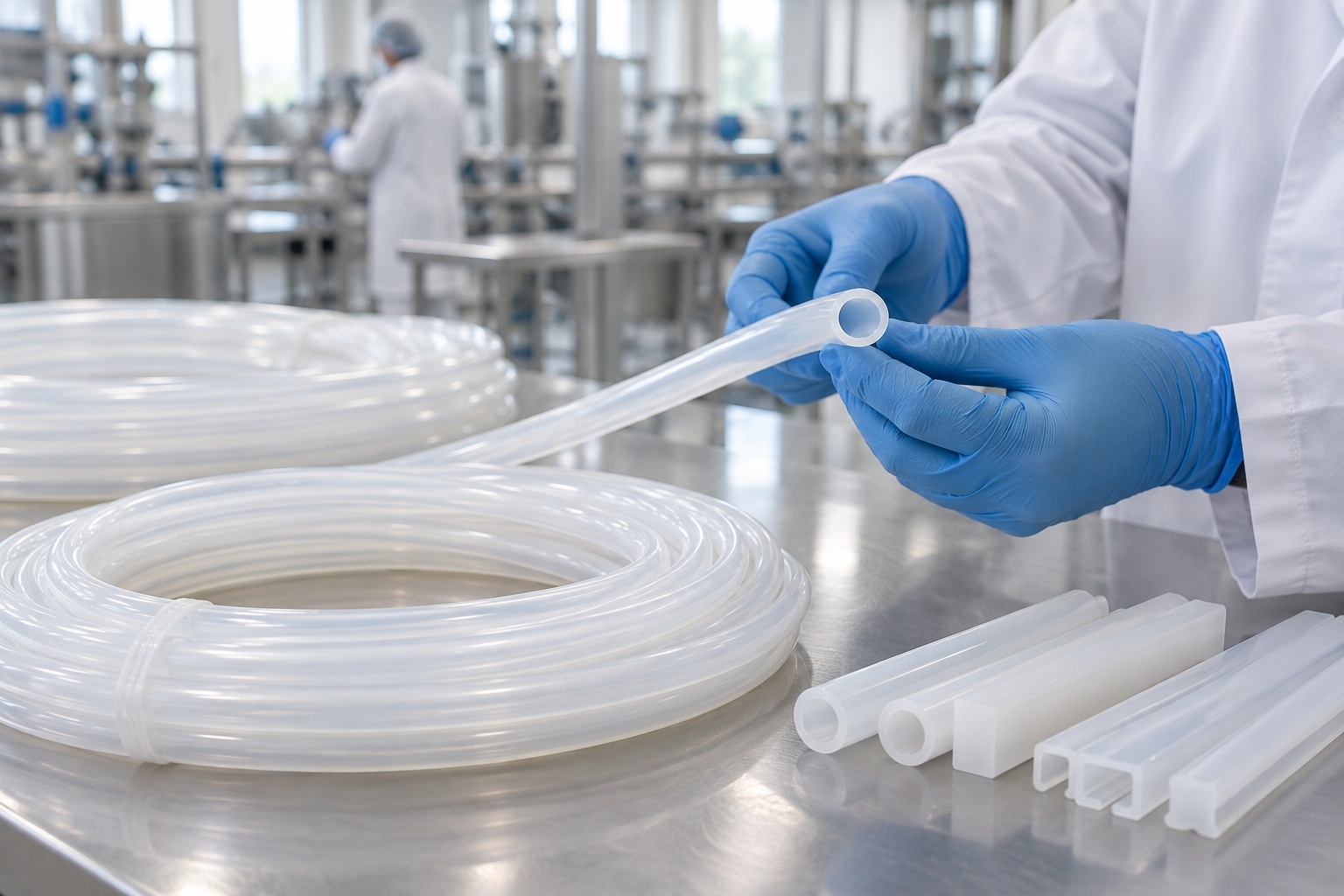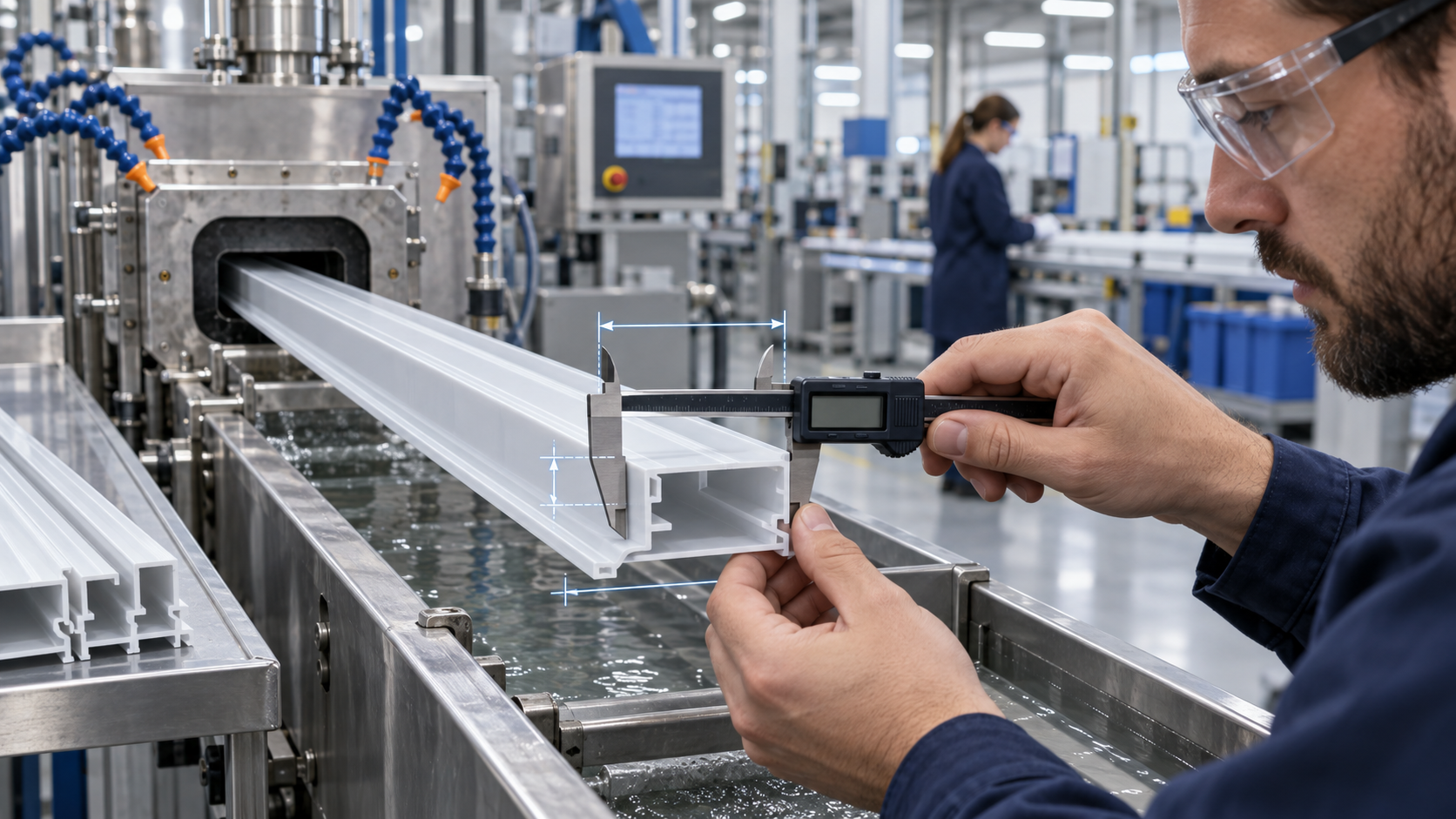
Choosing the right plastic material is one of the most consequential decisions in any extrusion project. The material you select determines everything — from mechanical performance and chemical resistance to production costs and end-use durability.
Three of the most commonly extruded thermoplastics are PVC (polyvinyl chloride), ABS (acrylonitrile butadiene styrene), and HDPE (high-density polyethylene). Each brings distinct advantages, and each has limitations that make it better suited for certain applications than others.
This guide breaks down the key differences between PVC, ABS, and HDPE — covering mechanical properties, chemical resistance, cost, environmental considerations, and real-world applications — so you can make a confident, informed material selection for your next custom extrusion project.
Material Properties at a Glance
Before diving into each material, here’s a quick comparison of the core properties that matter most in plastic extrusion:
| Property | PVC | ABS | HDPE |
|---|---|---|---|
| Density (g/cm³) | 1.30–1.45 | 1.04–1.07 | 0.93–0.97 |
| Tensile Strength (MPa) | 40–60 | 40–50 | 25–45 |
| Impact Resistance | Moderate | High | Very High |
| Max Service Temp (°C) | 60–80 | 80–100 | 80–120 |
| Chemical Resistance | Excellent | Moderate | Excellent |
| UV Resistance | Good (with stabilizers) | Poor | Moderate |
| Flame Resistance | Self-extinguishing | Flammable | Flammable |
| Relative Cost | Low | Medium | Low–Medium |
| Recyclability | Limited | Recyclable | Highly Recyclable |
PVC: The Versatile Workhorse
PVC is the world’s third most widely produced synthetic polymer, and for good reason. Its combination of low cost, chemical resistance, and flame retardancy makes it a go-to choice across dozens of industries.
Key Strengths
- Chemical resistance: PVC handles acids, alkalis, and many industrial solvents without degradation — making it ideal for chemical processing environments
- Flame retardancy: PVC is inherently self-extinguishing, which is critical for building and electrical applications
- Rigidity and formability: Available in both rigid and flexible formulations, PVC can be tailored for an enormous range of profiles
- Cost efficiency: Typically the lowest-cost option among the three, especially for high-volume runs
Limitations
- Lower impact resistance compared to ABS and HDPE, especially in cold temperatures
- Temperature ceiling is lower — rigid PVC softens around 60–80°C
- Recycling is more complex due to chlorine content and plasticizer additives
Best Applications for PVC Extrusions
- Window and door profiles
- Pipe and conduit systems
- Electrical cable sheathing
- Medical tubing (flexible PVC)
- Signage and trim profiles
ABS: The Impact-Resistant Performer
ABS occupies a unique position between standard commodity plastics and higher-performance engineering polymers. Its combination of toughness, surface quality, and dimensional stability makes it a favourite for visible, functional components.
Key Strengths
- Impact resistance: ABS absorbs shocks exceptionally well, maintaining structural integrity under stress
- Surface finish: Produces smooth, glossy surfaces that are easy to paint, plate, or print on — ideal for cosmetic applications
- Dimensional stability: Maintains tight tolerances during and after extrusion, which is critical for precision profiles
- Higher heat resistance: Performs well at temperatures up to 80–100°C, well above PVC’s range
Limitations
- Poor UV resistance — prolonged sun exposure causes yellowing and brittleness without UV stabilizers
- Flammable and requires flame-retardant additives for applications that need fire compliance
- Higher cost than PVC and HDPE, especially for specialty grades
- Lower chemical resistance — vulnerable to ketones, esters, and some chlorinated solvents
Best Applications for ABS Extrusions
- Automotive trim and interior components
- Consumer electronics housings and bezels
- Point-of-purchase (POP) displays and retail fixtures
- Appliance trim and panels
- Protective edging and impact guards
HDPE: The Tough, Lightweight Champion
HDPE is one of the most widely recycled plastics globally, and its performance profile makes it especially well-suited for outdoor, chemical, and food-contact applications. Its low density and high impact strength give it a distinct advantage in applications where weight matters.
Key Strengths
- Exceptional impact resistance: HDPE maintains toughness even at very low temperatures, making it ideal for cold-weather applications
- Chemical and moisture resistance: Resistant to most acids, alcohols, and aqueous solutions — performs extremely well in wet or chemically active environments
- Lightweight: At 0.93–0.97 g/cm³, HDPE is significantly lighter than PVC and ABS, reducing material costs and shipping weight
- Food safety: FDA-approved grades are widely available for food-contact applications
- Recyclability: One of the most commonly recycled plastics worldwide (Resin Code #2)
Limitations
- Lower tensile strength and stiffness compared to PVC and ABS — not ideal for load-bearing structural profiles
- Difficult to bond or paint without surface treatment
- Higher thermal expansion can cause dimensional changes in applications with wide temperature swings
- Moderate UV resistance — requires UV stabilizers for long-term outdoor exposure
Best Applications for HDPE Extrusions
- Piping and conduit for water, gas, and chemical transfer
- Outdoor furniture and playground equipment components
- Marine and dock profiles
- Food processing equipment guards and liners
- Environmental containment profiles
Cost Comparison and Environmental Considerations
From a raw material standpoint, PVC is typically the most cost-effective option for high-volume extrusion runs, especially when rigid formulations are used. HDPE falls in the low-to-medium range, while ABS is generally the highest-cost material of the three.
However, material cost is only part of the equation. Consider these additional factors:
- Tooling costs: All three materials use similar extrusion tooling, so die costs are comparable. However, materials with tighter tolerance requirements (like ABS) may need more precision tooling.
- Secondary operations: ABS accepts paint and adhesives readily, potentially reducing finishing costs. HDPE often requires corona or plasma treatment for bonding.
- Sustainability goals: If recyclability is a priority, HDPE is the clear winner. ABS is recyclable but less commonly collected. PVC recycling remains limited in most regions.
- Lifespan costs: The right material choice upfront prevents premature failures. Using HDPE in a high-rigidity application or PVC in a high-impact environment leads to costly replacements.
If you’ve previously compared PVC vs ABS vs Polypropylene, note that HDPE offers distinct advantages over PP in chemical resistance and low-temperature toughness, making it the preferred choice for harsher environments.
Decision Matrix: How to Choose the Right Material
Use this decision framework based on your project’s primary requirements:
Choose PVC when:
- Cost is a primary driver and volumes are high
- Flame retardancy is required (building codes, electrical)
- The profile will be used indoors or in chemically active environments
- You need both rigid and flexible options from the same material family
Choose ABS when:
- Impact resistance and surface finish quality are critical
- The part will be painted, plated, or printed
- Operating temperatures exceed PVC’s range (up to ~100°C)
- Dimensional precision and cosmetic appearance matter
Choose HDPE when:
- The application involves outdoor, wet, or chemically harsh environments
- Weight reduction is important
- Food-contact compliance is required
- Sustainability and recyclability are project priorities
- Low-temperature performance is needed
Still unsure which material is right for your project? Accord Plastics works with all three — plus polypropylene, acrylic, Santoprene, and many other materials. Our engineering team can help you evaluate options based on your specific performance requirements, budget, and production timeline.
Frequently Asked Questions
Can you mix materials in a single extruded profile?
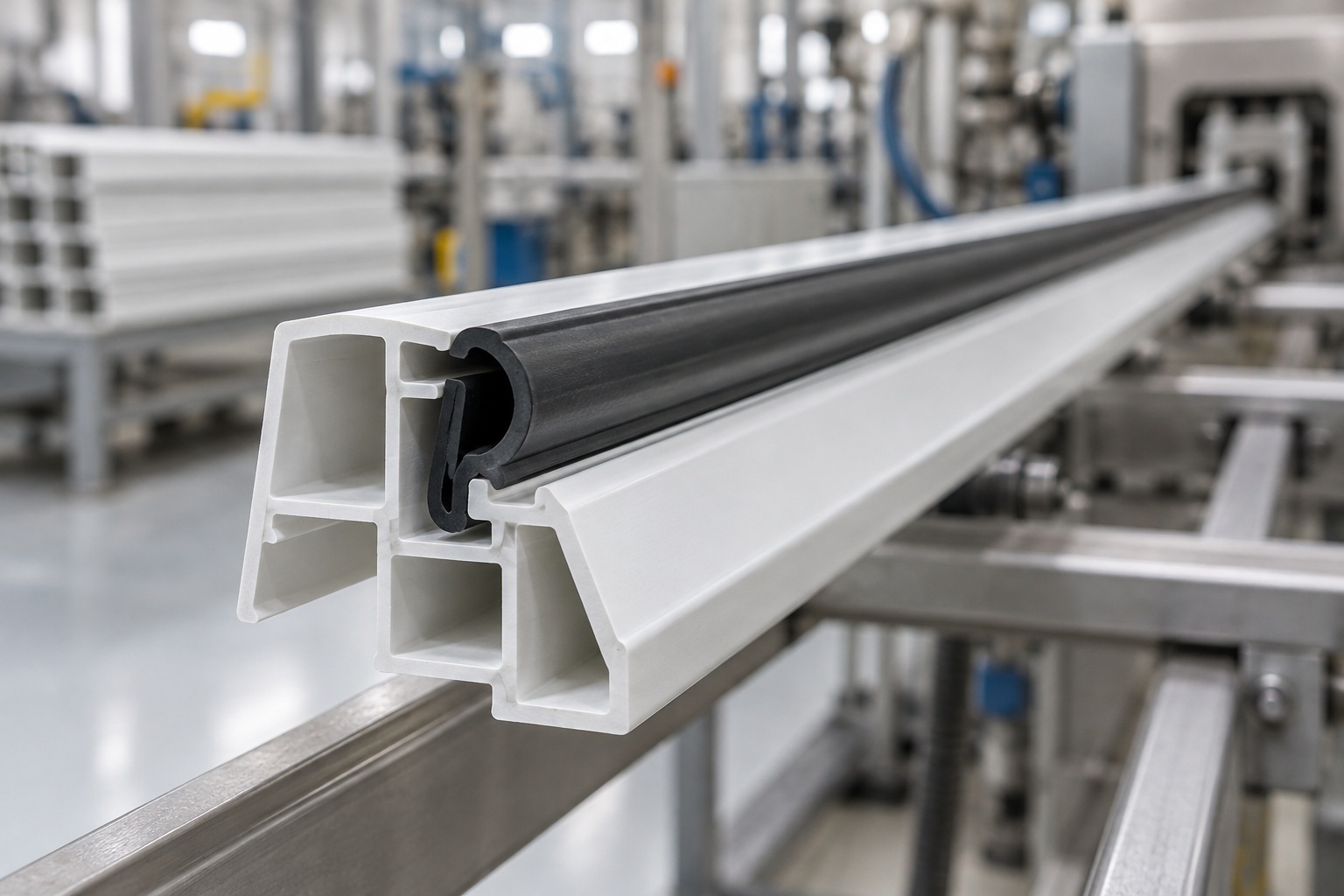
Yes. Co-extrusion allows two or more materials to be combined in a single profile — for example, a rigid PVC core with a flexible PVC seal, or an ABS structural base with a decorative cap layer. Accord Plastics offers cap-stocking and co-extrusion services for multi-material profiles.
Which material is best for outdoor applications?
HDPE is generally the best choice for outdoor use due to its moisture resistance, chemical stability, and impact performance in cold weather. PVC with UV stabilizers is also a strong option for profiles that need rigidity. ABS is typically not recommended for prolonged outdoor exposure without a protective coating.
How do I know if my application needs a specialty grade?
If your project involves extreme temperatures, food contact, medical use, or specific flammability ratings, a specialty or compounded grade may be necessary. Accord’s engineering team evaluates each project individually to recommend the right grade and formulation.
Is HDPE more expensive than PVC?
HDPE is slightly more expensive per kilogram than standard rigid PVC, but it’s lighter — which means you get more linear feet per kilogram. For outdoor or chemical-exposure applications, HDPE’s durability also reduces long-term replacement costs.
Get Expert Material Guidance
The right material choice can make or break a custom extrusion project. At Accord Plastics, we’ve spent over 35 years helping engineers, product designers, and procurement teams select the optimal material for their applications — running 22 extrusion lines across a wide range of thermoplastics.
Have a project that needs material selection support? Request a quote or reach out to our engineering team to discuss your requirements.