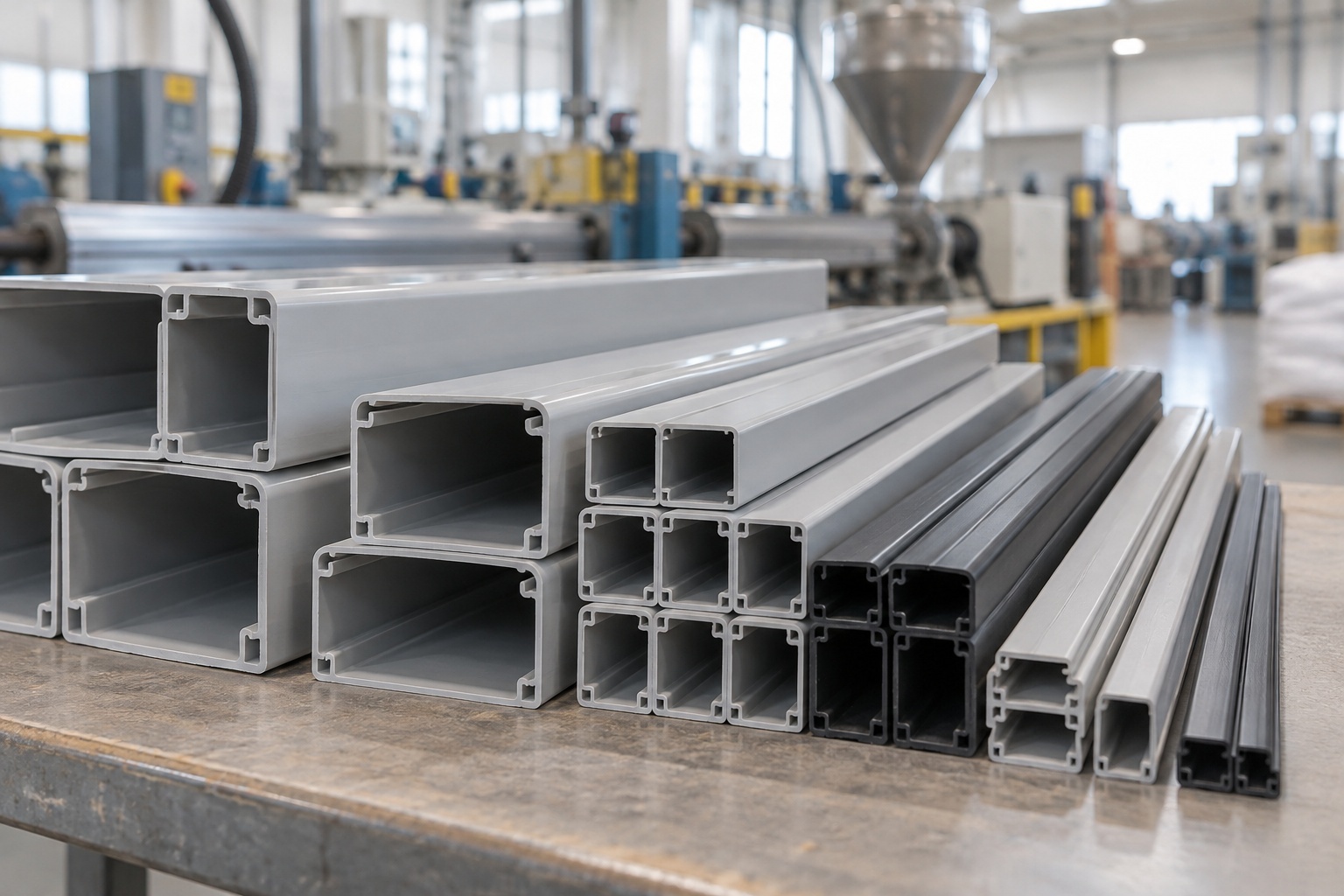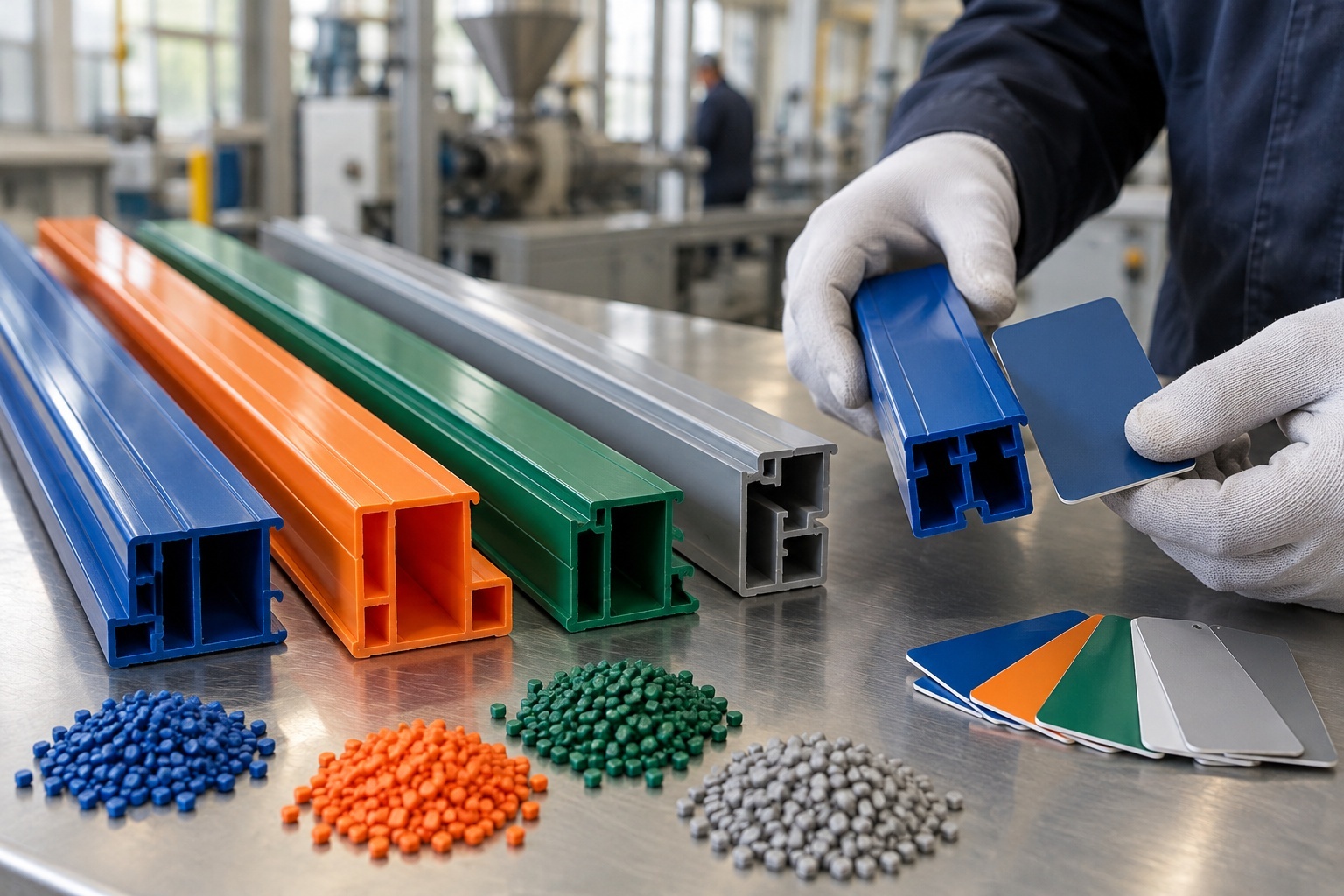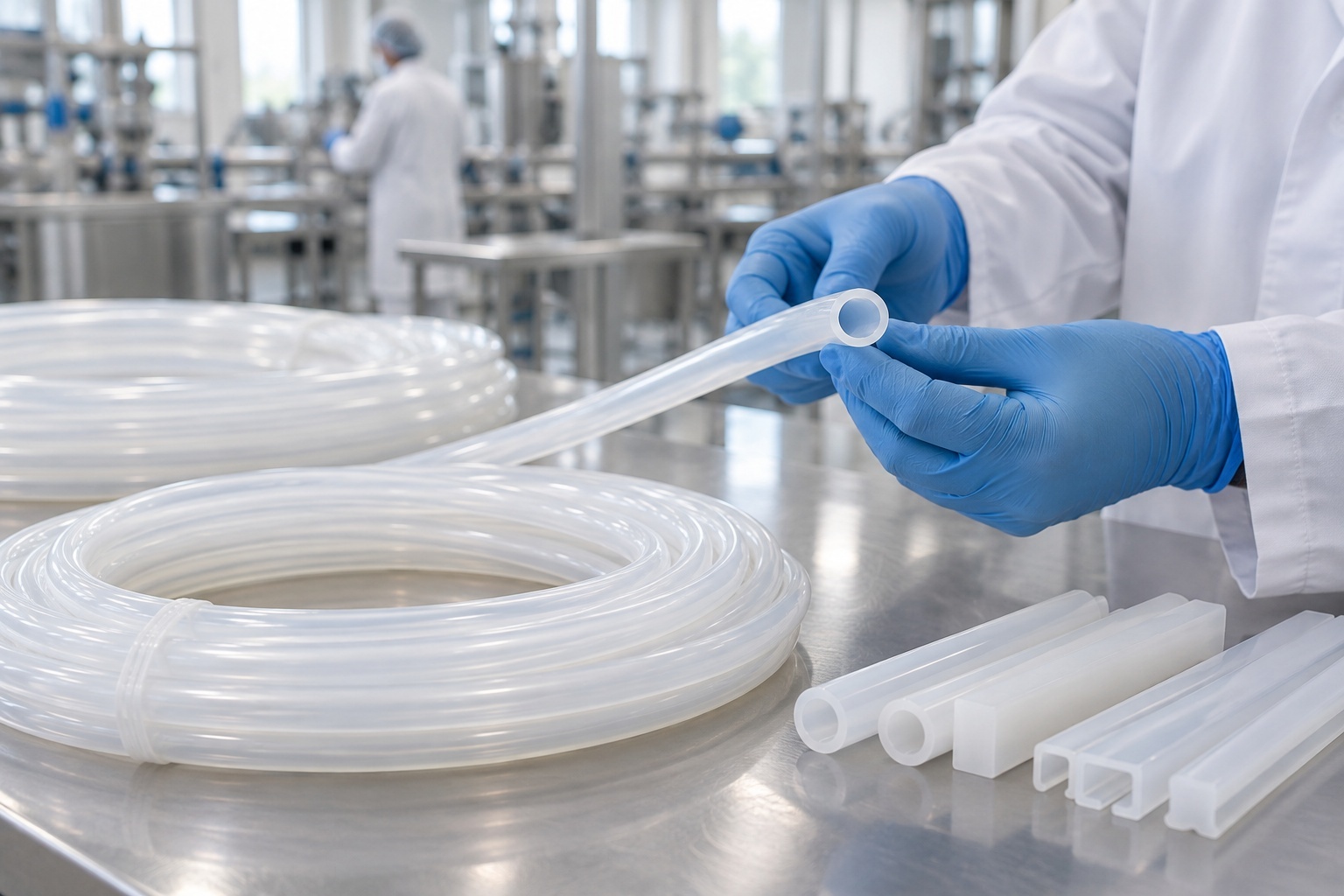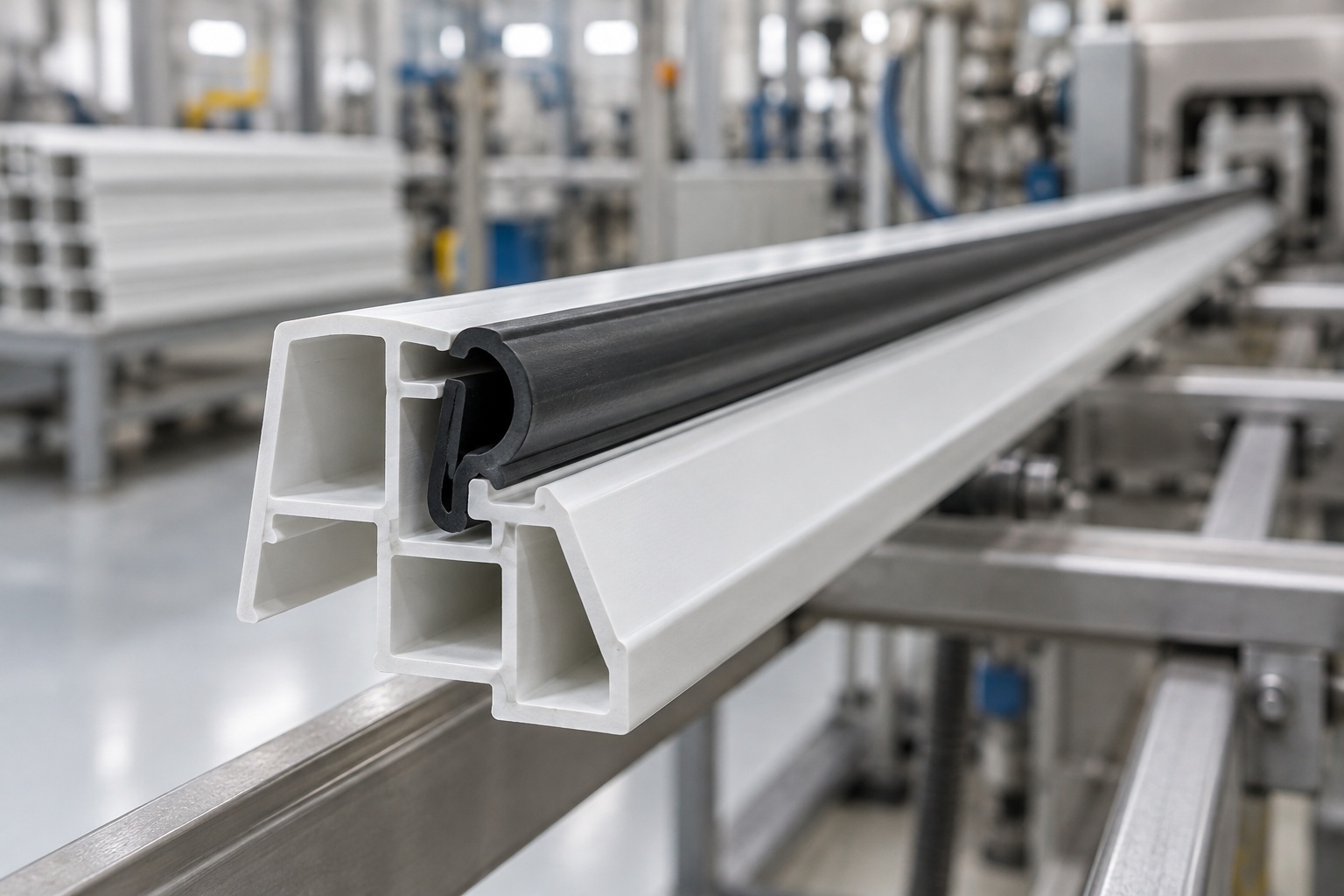
You have a CAD file, a target launch date and a team that wants to hold a real part in their hands. The question is whether extrusion is the right way to get there. For many continuous parts (trims, seals, channels, tubes, guards and custom profiles), plastic extrusion prototyping is the fastest route from a drawing to a sample you can test, fit and approve, and the same die often carries straight into production.
This guide walks engineers and product designers through when extrusion makes sense for a prototype, what the prototype-to-production timeline looks like, how tooling costs compare with 3D printing and injection molding, and the design and sampling decisions that save you a rework cycle.
When Does Extrusion Make Sense for Prototyping?
Extrusion pushes molten plastic through a shaped die to form a continuous profile with the same cross-section along its whole length. That makes it ideal for some parts and a poor fit for others. A quick way to decide:
Extrusion is usually the right call when
- The part has a constant cross-section. Tubing, edge trim, gaskets, channels, rails, light diffusers, wire guards and similar linear parts are natural extrusion candidates.
- You need real production material. A 3D-printed sample can show shape, but it cannot tell you how rigid PVC, flexible TPE or a co-extruded seal will behave in the field. An extruded prototype uses the actual resin.
- You need length. Printing a 2-metre profile is slow and expensive. Extrusion produces length as a matter of course.
- The prototype is a step toward production. Because the prototype die is often refined into the production die, the work you do now is not thrown away.
Consider another method first when
- The geometry changes along its length (bosses, ribs, threaded features or closed ends).
- You only need a visual model for a presentation, not a functional sample.
- The design is still changing daily. In that phase, a quick 3D-printed model is a cheaper way to settle the basic shape before you commit to a die.
If you are still weighing processes, our comparison of plastic extrusion vs injection molding breaks down which geometries suit each one.
The Plastic Extrusion Prototyping Timeline: CAD to First Article
Every project is different, but most extrusion prototypes move through the same five stages. Knowing them helps you plan a realistic launch date and spot where time usually gets lost.
1. CAD review and design for manufacturability
Your extruder reviews the cross-section drawing (a 2D profile drawing with dimensions and tolerances, plus a 3D file if you have one). Expect questions about wall thickness, corner radii, critical dimensions and how the part mates with other components. This is the cheapest point to change the design.
2. Material selection
Material choice affects die design, so it happens early. Rigid PVC, ABS, polypropylene, polyethylene, acrylic and thermoplastic elastomers such as Santoprene all shrink, swell and cool differently. If you are not sure which resin fits, see our guide to PVC vs ABS vs HDPE.
3. Die design and tooling
The die is machined to account for die swell and shrinkage, so its opening is not a carbon copy of your finished profile. Downstream tooling, such as sizers or vacuum calibration, may be built too. Tooling is usually the longest single step in the prototype phase.
4. Sampling and first article
The die goes on the line, and the operators adjust temperatures, speed and cooling until the profile runs stable. Samples are cut, measured and checked against your drawing. The first article inspection documents the dimensions of a part made under production conditions.
5. Approval, adjustments and full run
You test fit and function. If something is off, the die is tweaked and sampled again. Once you sign off, the same tooling and settings are used for production, which is why a well-run prototype phase shortens the path to full volume.
How long does it take? Simple profiles in standard materials move much faster than multi-material or tight-tolerance parts. Ask your extruder for a stage-by-stage schedule at the quote stage rather than a single date, so you can see where the time goes.
Tooling Costs: Short-Run Extrusion vs 3D Printing vs Injection Molding
Prototype budgets get blown when teams compare the wrong numbers. Here is how the three common routes compare at a high level.
| Factor | 3D printing | Extrusion prototype | Injection molding |
|---|---|---|---|
| Upfront tooling | None | Moderate (an extrusion die is generally simpler than a mold) | High (a production mold is a major investment) |
| Material | Printing resins or filaments, often not the production grade | Actual production resin | Actual production resin |
| Best for | Early shape checks, visual models | Functional testing of continuous profiles, short runs | Discrete 3D parts at volume |
| Cost per part at volume | High | Low | Low |
| Carries into production | No | Often, after refinement | Yes, but changes are costly |
The takeaway: for a linear part, a 3D print is great for a first look, but an extruded prototype is the one that proves the part works. Extrusion dies also tend to cost far less to modify than injection molds, which matters when you expect a revision or two.
Design-for-Extrusion Tips That Save a Rework Cycle
Most re-sampling comes down to a handful of design details. Getting these right on the first drawing is the simplest way to protect your schedule.
Keep walls as uniform as you can
Thick and thin sections cool at different rates, which causes warping, sink and dimensional drift. Where a thick section is unavoidable, talk to your extruder about coring it out.
Add radii to corners
Sharp internal corners concentrate stress and slow material flow. Even a small radius helps the profile run consistently.
Tolerance only what matters
Tight tolerances on every dimension raise cost and slow sampling. Flag the dimensions that drive fit and function and allow standard tolerances elsewhere. Our guide to plastic extrusion tolerances explains what is realistic before prototyping.
Think about the whole assembly
Share how the profile mates with other parts, how it will be cut, and whether it needs tape, punching or fabrication afterward. Secondary operations can influence the profile design itself.
Decide on colour early
If the part must match a brand colour or an existing component, raise it at the start. Colour matching affects material ordering and sampling.
Material Sampling and Test Runs: What to Ask Your Extruder
A good prototype run answers your questions about fit, function and cost. Go in with a clear list:
- Which dimensions will be measured on the first article, and how? Agree on critical dimensions and inspection methods up front.
- How many sample lengths will I receive, and at what length? Make sure you have enough for fit testing, function testing and any certification work.
- Can we trial more than one material or durometer? Running two candidate materials in the same sampling window can save a full cycle.
- What happens if the first samples are out of spec? Understand how die adjustments and re-sampling are handled and priced.
- Will the production run use the same die and settings? Confirm how the prototype tooling carries forward.
- What secondary operations are available? Cutting, punching, tape application or fabrication can sometimes be tested during the prototype phase.
Before you request pricing, run through our custom extrusion quote checklist. A complete package (drawing, material, quantities, application and critical dimensions) gets you an accurate quote faster.
FAQ: Plastic Extrusion Prototyping
Can I prototype an extrusion without a full CAD model?
A dimensioned 2D cross-section drawing is often enough to start a discussion, and some extruders can help develop the drawing from a sample or sketch. A 3D file helps when the part mates with other components.
Is the prototype die reused for production?
Often, yes. The prototype die is typically refined during sampling and then used for the production run, so the investment carries forward.
Should I 3D print first or go straight to an extrusion prototype?
If your design is still changing, a quick 3D print to settle the shape can make sense. Once the cross-section is stable and you need to test real material performance, move to an extruded prototype.
What information speeds up a prototype quote?
A dimensioned drawing, the intended material (or the application and environment if you are unsure), estimated annual volume, colour requirements and the dimensions that matter most for fit.
Can extrusion prototypes include more than one material?
Yes. Co-extrusion combines materials, such as a rigid body with a flexible seal, in a single profile. Plan it from the start, because it affects die design.
Start Your Prototype: Get a Quote
Plastic extrusion prototyping gives you a real, testable part in production material and a die that is often ready to carry into full production. The fastest projects start with a clear drawing, an early material decision and an honest conversation about which dimensions really matter.
Accord Plastics has been extruding custom profiles for more than 50 years, with in-house engineering and design support and 3D model prototyping to help you test a concept before tooling. Ready to move from CAD to a first article? Contact Accord Plastics to request a quote for your custom profile.